
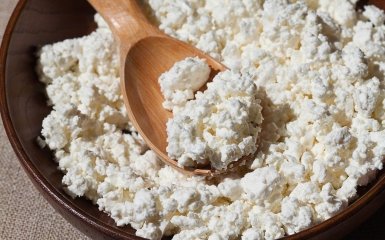
Cottage cheese is a simple product with high nutritional value. It contains complete milk protein, calcium, phosphorus, vitamin B12, and other trace elements, so it can be a convenient option for breakfast, snack, or dinner.
Points of attention
- Cottage cheese is a convenient source of complete protein, which is necessary for the functioning of the immune system and muscle tissue.
- Cheese is popular among fitness enthusiasts and sports training enthusiasts because it helps improve muscle mass.
- The beneficial properties of fermented milk cheese help provide a feeling of satiety and control blood glucose.
Cottage cheese is especially valuable for people who need to get enough protein without eating a lot. That is why it is often included in the diet during weight loss, sports and strength training.
At the same time, popular claims about this product are often exaggerated. Cottage cheese itself does not “burn fat,” treat osteoporosis, guarantee a healthy gut, or work as a natural sleeping pill.
Let's figure out what benefits it can really provide, how much protein it contains, and how to properly include it in your diet.
Are sour milk cheese and cottage cheese the same thing?
Not quite.
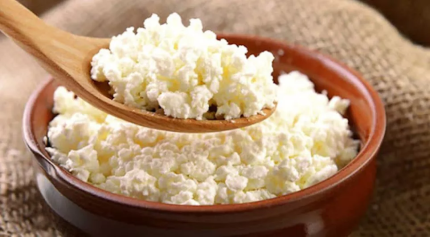
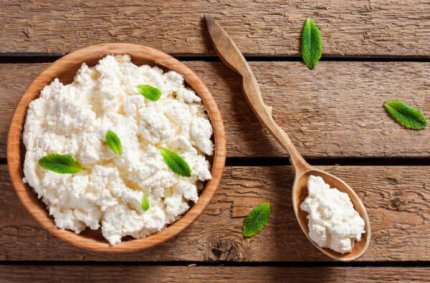
In Ukrainian culinary tradition, sour milk or homemade cheese usually has a dense, relatively dry texture. English-language cottage cheese is often wetter, composed of cheese grains, and may contain cream or added salt.
Due to different production technologies, the nutritional value also differs.
On average, 100 g of fermented milk cheese, depending on fat content and moisture content, may contain approximately:
80–170 kcal;
11–18 g of protein;
1–10 g of fat;
a few grams of carbohydrates.
You should check the label for the exact information on a particular product. Fat content, calcium, and sodium content can vary greatly.
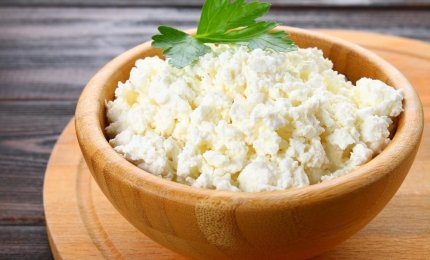
1. Cottage cheese is a convenient source of complete protein
One of the main advantages of the product is the high concentration of milk protein.
It contains all the essential amino acids that the body cannot synthesize on its own.
A significant portion of milk protein is casein. It is digested more slowly than whey protein and provides a longer supply of amino acids.
Protein is needed for:
maintenance of muscle tissue;
recovery after physical exertion;
synthesis of enzymes and hormones;
immune system function;
maintenance of body tissues.
That is why cottage cheese can be especially beneficial for people who exercise, move a lot, or are trying to increase the proportion of protein in their diet.
How much protein is in a serving?
If a product contains 16–18 g of protein per 100 g, a standard serving of 150–200 g can provide approximately 24–36 g of protein.
In wetter cottage cheese, the concentration may be lower — about 11–13 g per 100 g.
Therefore, two packages of "cheese" can differ significantly in composition.
2. Protein helps maintain muscle
Cottage cheese is popular among people who do strength training, and there is scientific logic to this.
A large meta-analysis of randomized trials showed that additional protein combined with strength training can promote greater gains in lean mass.
At the same time, cottage cheese by itself does not "build muscle."
For this you need:
force load;
sufficient total protein;
energy;
restoration;
regularity of training.
If a person simply adds another 300 g of cheese to an already sufficient calorie diet, muscles will not automatically grow from this.
3. It can help you stay fuller longer
Protein foods are usually more filling than foods where most of the calories come from quickly digestible carbohydrates.
Studies on milk proteins and dairy products show potential positive effects on satiety.
Therefore, a snack with cottage cheese can be more practical than a cookie or a sweet drink, especially if you need to work for several hours after such a snack.
For example:
Option 1: sweet bun + coffee.
Option 2: cottage cheese + berries + some nuts.
The second option usually provides more protein, fiber, and nutrients.
However, satiety is individual, and cheese does not guarantee an automatic reduction in appetite in every person.
4. Cottage cheese can be included in the diet for weight loss
The product is often called "dietary", but a clarification is needed here.
It can be useful during weight loss due to the combination of:
squirrel;
relatively moderate calorie content;
good satiety;
ease of preparation.
However, adipose tissue decreases when an energy deficit is maintained over time.
Therefore, cheese does not have any specific fat-burning properties.
It is also important to consider supplements.
200 g of cheese is one calorie.
200 g of cheese with:
a few spoons of sour cream;
honey;
jam;
nuts;
chocolate
— is completely different.
A healthy product can easily be turned into a fairly high-calorie dessert.
5. It is a source of calcium and phosphorus
Calcium is needed by the body to maintain bones and teeth, muscle function, transmit nerve signals, and other physiological processes.
For most adults, the recommended calcium intake is around 1,000 mg per day, and in some older age groups, the need is higher.
Dairy products are one of the common dietary sources of calcium.
However, sour milk cheese is not always a record holder for its content.
For example, 100 g of some varieties of cottage cheese contains about 100 mg of calcium. Yogurt or milk in a similar serving can sometimes provide more.
The indicators depend on the production technology: some calcium may pass into the whey during cheese making.
Therefore, the statement “a serving of cheese completely covers the daily calcium requirement” would be incorrect for most products.
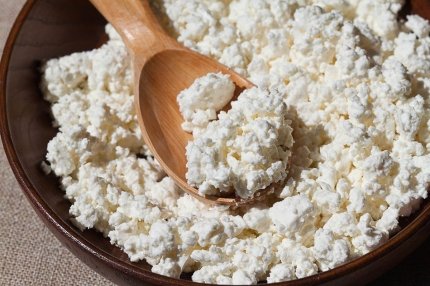
6. Protein and minerals are important for bone health
Bone tissue needs more than just calcium.
For its normal maintenance, the following are important:
calcium;
white;
phosphorus;
vitamin D;
physical activity;
hormonal status.
Sour milk cheese can provide several of these components at once, including protein, calcium, and phosphorus.
Systematic reviews of studies on dairy products demonstrate potential benefits for bone mineral density, although evidence regarding fracture prevention is less clear.
Therefore, cheese should be considered as part of a balanced diet for bone health, rather than as a means of preventing osteoporosis in itself.
What about vitamin D?
There may be very little of it in regular fermented milk cheese unless the product has been specially enriched.
Therefore, it is wrong to automatically call any homemade cheese a good source of vitamin D.
7. Cottage cheese contains vitamin B12
Vitamin B12 is naturally found in animal products, including dairy products.
It is needed for:
normal formation of erythrocytes;
functioning of the nervous system;
DNA synthesis.
For an adult, the recommended intake is about 2.4 mcg per day.
Cottage cheese can contribute to B12 supply along with milk, yogurt, eggs, fish, and meat.
However, the amount of vitamin B12 depends on the product, so you should not count on the same indicators in all types of cheese.
8. It can be a source of selenium
Selenium is needed in very small amounts, but plays an important role in the body.
He participates in:
the work of antioxidant systems;
thyroid hormone metabolism;
functioning of the immune system;
DNA synthesis.
Dairy products can provide part of your daily selenium intake.
In some types of cottage cheese, 100 g of the product provides a significant portion of the daily requirement.
However, cheese is not the best source of selenium. Fish, seafood, meat, eggs, and certain types of nuts can contain significantly more of this trace element.
9. Cheese may be a convenient food for glucose control, but it does not cure diabetes
Unsweetened cottage cheese usually contains few carbohydrates and a lot of protein.
Because of this, it can be combined with carbohydrate-rich foods to get a more balanced meal.
For example:
fruit + cottage cheese;
whole grain bread + cheese + vegetables.
Milk proteins may affect satiety and postprandial glycemic response.
But the phrase "cheese stabilizes blood sugar" is too categorical.
Glucose levels are affected by:
the whole dish;
amount of carbohydrates;
portion;
physical activity;
medicine;
insulin resistance;
individual reaction.
People with diabetes need to focus on an overall eating plan, not a single “healthy product.”
10. Cottage cheese overnight - yes
A popular fitness ritual is to eat cottage cheese before bed because of the casein.
There is some scientific basis for this.
Studies show that protein consumed before bed is digested overnight and may increase overnight muscle protein synthesis after exercise. Approximately 20–40 g of casein has been studied in particular.
This can be a useful strategy for people who are actively involved in strength training.
However, there is an important clarification.
Cheese is not a sleeping pill.
Milk protein contains the amino acid tryptophan, which the body uses in biochemical pathways related to serotonin and melatonin.
But this does not mean that a plate of cottage cheese is guaranteed to improve sleep.
Systematic studies of protein before bed are primarily concerned with muscle recovery, not the treatment of insomnia.
If your sleep is regularly disturbed, you shouldn't look for a solution only in the "right dinner."
11. Not every fermented milk cheese is a probiotic product
A common mistake is to consider all fermented milk products to be a source of live probiotic cultures.
It depends on the production method.
Yogurt or kefir is usually made using bacterial cultures.
Live microorganisms may be preserved in fermented milk cheese, or they may be absent or contained in an amount insufficient to call the product a probiotic.
Therefore, if you are looking for a probiotic effect, look at the labeling:
"living cultures";
specific strains of bacteria;
producer information about crops.
The mere fact that the product is fermented milk does not guarantee a proven probiotic effect.
Similarly, cheese is not the main source of fiber, which is necessary for normal intestinal function.
To make the snack more complete, it can be combined with berries, fruits, vegetables, seeds, or whole grains.
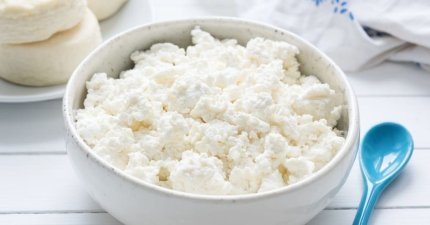
Which fermented milk cheese is better: 0%, 5% or 9%
There is no single correct fat content.
Low-fat or 0–2%
Contains fewer calories and can be convenient when you are lacking energy.
At the same time, not everyone likes its taste and texture.
5%
A compromise between calories, taste and fat content.
For many people, this type of cheese is convenient to use every day.
9% or more
It may be creamier and more filling, but contains more calories and saturated fat.
That doesn't make it "harmful."
Portion size and overall diet are important.
If you like a 5% fat product and it helps you eat nutritious protein foods regularly, there's no need to force yourself to switch to a completely fat-free option.
How much fermented milk cheese can you eat per day?
There is no universal mandatory portion.
For a healthy adult, a practical option might be around 100–200 g per meal , depending on:
calorie content of the diet;
total protein needs;
physical activity;
other dairy products;
portability.
There is no need to eat cheese every day if you are getting protein and necessary nutrients from other foods.
A varied diet is usually better than a menu built around a single “superfood.”
What to eat sour milk cheese with
For breakfast
Cottage cheese + berries + fruit + a small amount of nuts.
For a snack
Cottage cheese + apple or pear.
For the unsweetened option
Cheese + greens + cucumber + tomato + whole grain bread.
After training
Cheese + fruit or other carbohydrate source.
For a more filling dinner
Cheese + vegetable salad + bread or cereal depending on energy needs.
But a large amount of sugar, jam, sweet syrups, and fatty sour cream can significantly increase the calorie content of a dish.
Who may not be suitable for fermented milk cheese?
People with an allergy to cow's milk proteins
Lactose and allergy are different things.
Lactose-free dairy products still contain milk proteins and are not safe if you are allergic to them.
With lactose intolerance
Sour milk cheese contains lactose.
The amount and individual tolerance may vary. Fresh cheeses often contain more lactose than aged hard cheeses.
Some people tolerate a small portion well, while others prefer lactose-free products.
Limit sodium if necessary
Some types of grainy cottage cheese are quite salty.
For example, 100 g of certain commercial products may contain over 300 mg of sodium.
Ukrainian unsalted sour milk cheese may have completely different indicators.
Therefore, if you have hypertension or are advised by your doctor to limit sodium, you should check the label.
For kidney diseases
The need for protein, phosphorus, potassium, and sodium in chronic kidney disease may vary depending on the stage of the disease and treatment.
In such a situation, the amount of dairy products should be agreed with a doctor or nutritionist.
Special care with homemade cheese made from raw milk
The word "homemade" is often perceived as a synonym for a more natural and healthy product.
From a food safety perspective, this is not always the case.
Fresh cheeses made from unpasteurized milk may contain pathogenic bacteria.
Foodborne infections can be especially dangerous for:
pregnant women;
small children;
older people;
people with weakened immunity.
For pregnant women, a safer choice is fresh cheese made from pasteurized milk, made and stored in compliance with hygienic requirements.
If you buy homemade cheese at the market, it is important to know the origin of the milk, the conditions of production and storage of the product.
How to choose good sour milk cheese in the store
Look at a few parameters.
Composition
The simpler the product, the clearer it is what you are buying.
White
For drier cottage cheese, there will often be more than for moist cottage cheese.
Fat content
Choose according to your overall diet, not according to the principle of “0% is always better.”
Sodium
Especially important for salty, granular cheese.
Added sugar
Sweet cheese desserts are a separate category of products and can contain significantly more sugar and calories.
Pasteurization
It is especially important for pregnant women and other people at increased risk of foodborne infections.
Conclusion
Cottage cheese can indeed be a very healthy part of your diet. Its main benefits are much more practical than its loud promises: lots of high-quality protein, calcium, phosphorus, vitamin B12, selenium, and ease of preparation.
It is good for a protein-packed breakfast or snack, can help maintain satiety, and provide protein for people who are exercising or losing weight.
However, cheese should not be turned into a medicinal product. It does not guarantee weight loss, does not replace osteoporosis or diabetes therapy, and its "probiotic" and sleeping properties are often exaggerated.
The best approach is to use cottage cheese as one of the various sources of protein in a balanced diet and adjust its fat content, portion size, and composition to your own needs.
Important: the material is for informational and educational purposes only and does not constitute medical advice, diagnosis, or recommendations for treatment or nutrition for diseases. Self-medication can be harmful to your health. If you have allergies, kidney disease, diabetes, digestive system diseases, other chronic conditions, or require a special diet, consult your doctor first.
FAQ
How much protein is in cottage cheese?
Depending on the fat content and moisture content, approximately 11–18 g of protein per 100 g. Dense dry cottage cheese usually contains more protein per 100 g than moist cottage cheese.
Can you eat cottage cheese every day?
For most healthy people, yes, if it is tolerated well and fits into a varied diet. There is no mandatory need to eat it every day.
Which cheese is better for weight loss — 0% or 5%?
Both can be fine. Low-fat has fewer calories, but 5% may be tastier and more filling. What matters more is the total calorie intake, the amount of protein, and the portion size.
Can I eat cottage cheese in the evening?
Yes. There's no rule that says you can't have cheese after a certain hour. For people who exercise, a protein meal before bed can even support nighttime muscle protein synthesis.
Does cottage cheese help you lose weight?
By itself, no. The high protein content can help maintain satiety, so it's a good idea to include it in a calorie-reduced diet. Losing fat requires a long-term energy deficit.
Is cottage cheese good for bones?
It contains protein, calcium, and phosphorus—nutrients important for bone health. However, one product alone cannot prevent osteoporosis.
Does fermented milk cheese contain probiotics?
Not necessarily. The presence of live cultures depends on the production technology. If you need a probiotic product, look for the appropriate information on the packaging.
Can I eat cheese if I am lactose intolerant?
Depends on the degree of intolerance and the product. Some people can tolerate small portions, others need a lactose-free option. Fresh cheeses usually contain more lactose than aged hard cheeses.
Is low-fat cottage cheese healthy?
Yes. It remains a source of protein and a number of minerals. However, zero fat in itself does not make the product any healthier than the 2% or 5% version.
Can pregnant women eat cottage cheese?
You can choose fermented milk cheese made from pasteurized milk and stored safely. Homemade fresh cheese made from unpasteurized milk is best avoided during pregnancy due to the risk of foodborne infections.
undefined

