
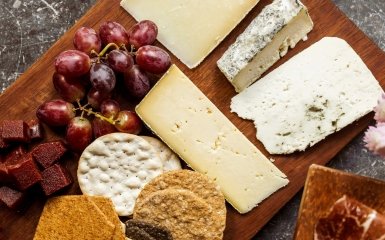
There is no single “healthiest” cheese. Parmesan is very high in calcium and protein, but it’s also high in calories and sodium. Cottage cheese is a good way to increase protein without adding a lot of calories. Mozzarella often contains less salt than aged hard cheeses. And people with lactose intolerance often prefer Parmesan, aged cheddar, and other mature cheeses that have very little lactose left.
Therefore, it is more correct to ask: which cheese best suits your purpose?
For a daily diet, the combination of protein, calcium, calories, saturated fat, and sodium is important. Portion size is also important: 30 g of parmesan and 200 g of cottage cheese are completely different products in volume, so a direct comparison "per 100 grams" is sometimes misleading.
How is cheese good for the body?
Most natural cheeses are concentrated sources of nutrients.
Depending on the variety, they provide:
complete protein;
calcium;
phosphorus;
vitamin B12;
vitamin A;
zinc;
other micronutrients.
Calcium is especially important. It is needed for normal bone and tooth structure, muscle contraction, nervous system function, and other processes. Dairy products, including cheese, are among the main dietary sources of calcium. For adults, the recommended amount is usually about 1,000 mg per day, and for women over 50 and all people over 70 — about 1,200 mg.
Cheese is also a good source of protein. A small serving of hard cheese can contain about 7–10 g of protein, while a large serving of fermented milk cheese can contain 20–30 g or more, depending on the product.
But cheese also has its weaknesses.
A healthy composition does not mean that the quantity does not matter.
Many cheeses contain:
a significant amount of saturated fats;
a lot of sodium;
high concentration of calories.
A typical serving of hard cheese can have about 5–6 grams of saturated fat. Salt is required in the production of many varieties, so the sodium content can also be quite high.
However, the health effects of cheese are more complex than the simple formula “saturated fat = bad cheese.” Studies show that the same amount of saturated fat in cheese and butter can have different effects on blood lipids. The structure of the product — the so-called food matrix, which includes protein, calcium, fat, fermentable compounds, and other components — probably plays a role.
This is not a reason to eat hard cheese without restrictions. The rule of thumb is simpler: portion size and dietary context are more important than finding the “perfect” variety .

1. Sour milk cheese is one of the most convenient for a protein diet
If the goal is to get more protein without being too high in calories, cottage cheese is one of the most practical options.
Depending on the fat content and production technology, 100 g of the product may contain approximately 12–18 g of protein.
A 180–200 g serving easily provides over 20 g of protein, so this cheese is a good choice for:
for breakfast;
snack;
dinners;
diet during training;
nutrition of older people.
At the same time, there is a big difference between the products.
0–2% fat cottage cheese and high-fat homemade cheese have different calorie content. Don't automatically assume that the low-fat version is better: taste, satiety, and the overall diet are important.
For most people, a convenient compromise may be a moderate-fat cheese without sugar and sweet fillers.
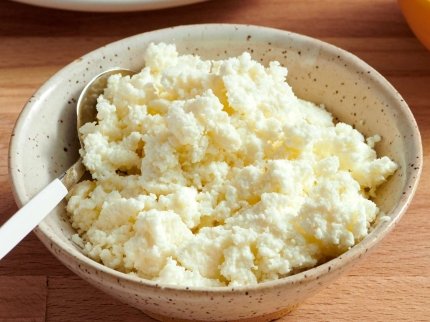
2. Cottage cheese — high in protein with relatively low calories
Grainy cottage cheese is often confused with regular cottage cheese, although the technology and texture are different.
A typical product per 100 g may contain approximately:
11–13 g of protein;
about 100 kcal;
about 4 g of fat.
In terms of protein to calorie ratio, this is a very convenient product.
But there is a nuance - salt.
Some types of cottage cheese are quite high in sodium. Therefore, a person with hypertension or recommended to limit sodium is better off comparing labels from different manufacturers.
The words “fitness” or “high-protein” in themselves do not guarantee anything.
3. Mozzarella is a good all-purpose option
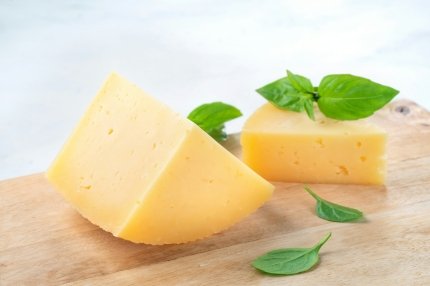
Mozzarella is interesting because it combines protein and calcium with a relatively mild flavor.
Compared to many aged hard cheeses, some types of mozzarella contain less sodium. This is especially true of fresh mozzarella, although the composition varies greatly by manufacturer.
Part-skim mozzarella may also have less saturated fat than many solid varieties.
According to the NIH, about 42 grams of part-skim mozzarella can provide over 300 mg of calcium — about a quarter of the standard daily value.
But there is a trap.
Mozzarella in a salad with tomatoes, herbs, and olive oil and a large pizza with double cheese are dishes with different nutritional profiles.
When evaluating the benefits of cheese, you also need to look at what it is eaten with.
4. Parmesan is the champion in calcium and protein concentration
Hard aged Parmesan is very concentrated.
100 grams can contain about 35 grams of protein and over 1,000 mg of calcium. However, this amount of cheese is high in calories and sodium, so a realistic serving size is much smaller, around 15–30 grams.
The strong flavor is the advantage of Parmesan.
For pasta, vegetables, salad or soup, a small amount is often enough to make the dish richer.
Parmesan is also interesting for people with lactose intolerance. During cheesemaking, a significant portion of the lactose is converted into whey, while the remainder is gradually fermented by bacteria. In long-aged hard cheeses, only trace amounts may remain.
5. Swiss cheese — high in protein and calcium with relatively little salt
Swiss-type cheeses, particularly Emmental, can be an interesting compromise for people who like hard cheeses but want to control sodium.
A typical Swiss cheese contains approximately 27 g of protein and almost 900 mg of calcium per 100 g. At the same time, the sodium in some traditional varieties is significantly lower than in Parmesan or feta.
The weak point is the high fat content.
Therefore, it is better to perceive it as a concentrated product and use it in small portions.
A piece of about 25–30 g with whole grain bread, an apple, or vegetables is a more practical everyday option than a large cheese plate.
6. Ricotta — a soft cheese with a moderate amount of salt
Ricotta is significantly different from hard cheeses.
Traditionally made from the whey left over from the production of other cheeses, it has a mild flavor and creamy texture.
100 g of whole milk ricotta may contain approximately:
7–8 g of protein;
about 150 kcal;
more than 200 mg of calcium;
about 110 mg of sodium.
This makes it a relatively low-salt option compared to feta, Parmesan, or many aged cheeses.
In terms of protein content, ricotta is inferior to cottage cheese and many hard cheeses.
So if your main goal is to maximize protein per calorie, it won't be the absolute leader. If you want a mild cheese with moderate sodium, ricotta might be a good choice.
7. Feta — smaller portions due to its distinct flavor
Feta has a strong salty flavor, so you often only need a very small amount.
100g of traditional feta has around 14g of protein, but also over 20g of fat. Due to its brine ripening, this cheese can be high in sodium.
Therefore, calling feta the "best diet cheese" just because of its moderate calorie content compared to some hard varieties is incorrect.
Its strong point is taste.
30–40 g of feta is enough to enrich a large salad of vegetables and herbs.
For someone who is restricting salt due to high blood pressure, edema, or other medical reasons, the amount of feta should be monitored especially carefully.
What about cheddar?
Cheddar provides plenty of protein, calcium, phosphorus, and vitamin B12.
Aged cheddar also contains very little lactose, so some people with lactase deficiency tolerate it much better than milk or fresh cheeses.
But it is a concentrated product in calories and saturated fats.
Therefore, cheddar can be part of a healthy menu, but the optimal portion is usually small.
A few thin slices in a sandwich with whole grain bread and vegetables is a different story than a double cheeseburger with bacon and sauce.
Which cheese to choose: a quick tip
| Goal | Practical choice |
| More protein with moderate calories | cottage cheese |
| More calcium in a smaller portion | parmesan, swiss, cheddar |
| Less sodium | ricotta, fresh mozzarella, some Swiss cheeses |
| With lactose intolerance | Parmesan, aged cheddar, Gruyere, other mature hard cheeses |
| For a hearty protein breakfast | cottage cheese |
| For salads | mozzarella, feta, ricotta |
| For a distinct taste, use a small portion | parmesan, feta, aged cheddar |
The exact composition of a particular product can vary significantly, so it is worth checking the label when choosing.
Which cheese is best for weight loss?
There is no special "fat-burning" cheese for weight loss.
The main role is played by the total calorie content of the diet.
A practical advantage may be cheeses that provide a lot of protein for relatively few calories. These often include moderate-fat cottage cheese and sour cream.
Protein foods are very filling, which can make it easier to control your appetite.
But even low-calorie cheese does not compensate for the excess energy from other foods.
For example, 150 g of cottage cheese with berries is one option. The same amount of cottage cheese with a large portion of honey, nuts, dried fruits, and chocolate can have several times higher calories.
Which cheese is best for bones?
Calcium, protein, vitamin D, physical activity, and overall health are important for bone tissue.
Hard cheeses stand out in terms of calcium concentration: Parmesan, Swiss, cheddar, and similar varieties.
But you don't need to get all your calcium exclusively from cheese.
The diet may also include:
milk;
natural yogurt;
kefir;
sardines with bones;
enriched herbal drinks;
tofu with calcium;
some green vegetables.
For people who need to control saturated fat or sodium, yogurt or milk will sometimes be more convenient sources of calcium than large portions of hard cheese.
What cheese can you eat with high cholesterol?
High cholesterol in itself does not mean an automatic ban on cheese.
It is worth paying attention to the total amount of saturated fat in the diet.
The American Heart Association recommends that people with cardiovascular risks choose low-fat or reduced-fat dairy products more often.
In practice, this can mean:
cottage cheese with reduced fat content;
sour milk cheese of moderate fat content;
partially skimmed mozzarella;
small portions of hard cheese.
It's important to evaluate the entire menu. A small amount of Parmesan on top of vegetables and legumes can fit perfectly into a healthy diet.
Can I have cheese if I am lactose intolerant?
In many cases, yes.
Lactose intolerance is not an allergy to milk. The problem is a lack of the enzyme lactase, which breaks down milk sugar.
During cheese production, a significant portion of the lactose is removed with the whey. During ripening, bacteria continue to ferment it.
Therefore, there is usually especially little lactose in:
parmesan;
Grana Padano;
aged cheddar;
Gruyere;
some other matured hard cheeses.
Fresh cheeses like ricotta, cottage cheese, or cream cheese may contain more residual lactose.
Tolerance is individual, so it is better to start with a small portion.
If you are allergic to cow's milk proteins, this advice is not suitable: the low lactose content does not make regular milk cheese safe.
Do all fermented cheeses contain probiotics?
No.
Many cheeses use bacteria during their production, but this does not mean that the finished product is automatically probiotic.
To be called a source of probiotics, a product must contain specific strains that are alive in sufficient quantities and their benefits must be proven.
Heating, ripening, and storage technology affects bacterial survival.
Therefore, the statement “any mozzarella or cheddar restores microflora” would be an exaggeration.
If the probiotic effect is an important criterion, it is worth looking for the appropriate manufacturer's labeling, and not focusing only on the name of the variety.
How much cheese can you eat per day?
There is no universal amount for cheese.
For a hard, concentrated product, a practical serving is often about 20–30 g . Soft cheeses are usually eaten in larger quantities.
For example:
parmesan — 15–30 g;
cheddar - about 25–30 g;
feta cheese - about 30–40 g;
mozzarella - 50–100 g depending on the dish;
sour milk cheese - 100–200 g;
cottage cheese — 100–200 g.
These are guidelines, not medical standards.
A person who eats a lot of other dairy products may need less cheese. However, if cheese is one of the main sources of protein and calcium, the situation is different.
How to choose good cheese in the store
The easiest way is to look not at marketing labels, but at the nutritional value table.
1. Check the protein
For fermented milk or granular cheese, 10–15 g of protein per 100 g is a good guideline.
In hard cheeses, the figure often exceeds 20 g.
2. Look at the sodium or salt
Especially if you have hypertension or your doctor has recommended limiting sodium.
Two cheeses of the same type can differ quite noticeably in the amount of salt.
3. Evaluate saturated fats
If cheese is a daily product, this indicator is more important than if you eat a small portion once every few days.
4. Don't confuse a cheese product with cheese
Products with vegetable fats, starch, and a large number of technological components may have a completely different nutritional profile.
5. Consider the actual portion
The numbers per 100 g of Parmesan look impressive, but few people eat 100 g of Parmesan at a time.
For practical choices, it is more useful to list the data for your usual portion.
Cheese during pregnancy: an important nuance
During pregnancy, not only nutritional value is important, but also microbiological safety.
Pasteurized cottage cheese, mozzarella, feta, ricotta, and many other cheeses are generally considered safe options. Hard cheeses like cheddar and parmesan are also considered low-risk.
Greater caution is needed with raw dairy products and soft cheeses with white or blue mold, as they may be associated with a risk of listeriosis. For some of these cheeses, thorough heating to a hot state is a safer option.
Therefore, during pregnancy, it is worth checking the type of cheese and information about pasteurization on the packaging.
Conclusion
There is no universally most beneficial cheese.
If you need a protein product with moderate calories , practical options would be sour milk cheese or cottage cheese.
If calcium is your main goal, Parmesan, Swiss cheese, and other hard varieties are strong options, but they are best eaten in small portions.
If you are lactose intolerant, long-aged cheeses are often better tolerated. If you need to control sodium , look for ricotta, fresh mozzarella, and some Swiss cheeses, and be sure to check the label.
The main principle is simple: a good cheese is one that provides protein and calcium, fits into your diet in terms of salt, fat, and calories, and is consumed in a reasonable portion.
FAQ
Which cheese is considered the healthiest?
There is no single most useful variety. For a high-protein diet, it is convenient to use sour milk cheese or cottage cheese, for calcium - hard cheeses, and for lactose intolerance - aged varieties.
Which cheese has the most protein?
Among traditional cheeses, Parmesan is very high in protein — about 35 g per 100 g. Swiss and cheddar cheeses also have high levels. However, their usual servings are much smaller than 100 g.
Which cheese is best for weight loss?
Curd cheese and cottage cheese are convenient options because of their good protein-to-calorie ratio. But the result depends on the total calorie content of the diet, not on the specific type of cheese.
Which cheese contains the most calcium?
The most concentrated sources include Parmesan and some other hard cheeses. 100 grams of Parmesan can have over 1,000 mg of calcium, but a typical serving is much less.
Which cheese contains the least salt?
The amount varies by recipe and brand. Ricotta, fresh mozzarella, and some Swiss cheeses may have relatively low sodium levels. Feta and Parmesan are usually saltier.
What cheese can you eat with high cholesterol?
You don't need to automatically ban cheese. It's a good idea to control portions and choose foods with reduced saturated fat more often — for example, low-fat cottage cheese, sour cream, or partially skimmed mozzarella.
What cheese can you eat if you are lactose intolerant?
The least lactose is usually found in aged hard cheeses: Parmesan, Grana Padano, aged cheddar, and Gruyere. Individual tolerance may vary.
Is feta good for you?
Feta contains protein, calcium, and other nutrients and can be part of a healthy diet. Because it is brine-cured, it is often high in sodium, so small portions are best.
Which is healthier - mozzarella or cheddar?
Depends on the purpose. Cheddar is usually more concentrated in protein and calcium and contains little lactose after aging. Mozzarella is often lower in calories, saturated fat, and sodium, especially in partially skimmed versions.
Can you eat cheese every day?
Yes, a small serving of cheese can be part of a balanced diet each day. It is important to consider the amount of sodium, saturated fat, calories, and other dairy products a person consumes throughout the day.

