
Raw vegetables are not always more nutritious than cooked ones. Heating can indeed reduce the amount of some heat-sensitive vitamins, but it also breaks down the plant's cell walls and can make certain carotenoids and other compounds more available for absorption.
Therefore, the question "are raw or cooked vegetables healthier?" does not have a universal answer. The specific product, nutrient, temperature, cooking time, and even the amount of water matter.
Points of attention
- Raw vegetables are not always more nutritious than cooked ones, but they retain more vitamins, particularly vitamin C and folate.
- Heat treatment of vegetables can reduce the content of some nutrients, but also increase the bioavailability of others, in particular carotenoids.
- The optimal approach is to combine raw and cooked vegetables in the diet, using different processing methods depending on the product.
- Some vegetables that are good to eat raw are: red peppers, tomatoes, cabbage, leafy greens, young zucchini. For others, cooking is recommended.
- Optimal methods of processing vegetables to preserve nutrients include steaming, briefly sautéing, and baking. Adding a small amount of fat can also improve the absorption of fat-soluble nutrients.
For example, red peppers are beneficial to eat raw if the goal is to get more vitamin C. And the body absorbs lycopene more efficiently from heat-treated tomatoes. Carrots become a better source of available carotenoids after cooking, while prolonged cooking of broccoli can lead to the loss of some vitamin C, folate, and biologically active compounds.
The optimal approach is to combine raw and cooked vegetables and choose the cooking method according to the specific product.
The material is for informational purposes only. Self-medication can be harmful to health. If you have digestive system diseases, food intolerances, special dietary restrictions, or other medical conditions, you should consult a doctor before making any significant changes to your diet.
What happens to vegetables during cooking?
Heat treatment starts several processes simultaneously.
Some nutrients are destroyed by heat or are lost to water. Others, on the contrary, become more easily accessible to the digestive system, so their actual absorption may increase.
Scientific reviews show that the outcome depends on the chemical properties of the specific compound and the cooking method. Particularly significant losses can occur with prolonged cooking in large amounts of water, while steaming or short heat treatment often better preserve water-soluble nutrients.
Therefore, it is important to distinguish between two concepts:
nutrient content — how much of it physically remains in the product;
bioavailability — how much of a product the body can release and absorb.
After cooking, the first indicator sometimes becomes less, and the second one becomes more.
Which substances react most to heating?
Vitamin C
Vitamin C is water-soluble and sensitive to temperature and oxidation.
Prolonged cooking of vegetables can cause significant losses, especially when the water is discarded after cooking. In studies, vitamin C retention varied significantly depending on the product and processing method, with boiling generally showing worse results than short microwaving or other methods with minimal water.
Therefore, vegetables rich in vitamin C should be regularly eaten raw or cooked briefly.
Folate
Folate is also a water-soluble vitamin. It can leach from vegetables into water during cooking and be partially destroyed.
In one study, spinach retained about half of its original folate content after traditional cooking, while steaming resulted in significantly better folate retention. A similar pattern was observed for broccoli.
Carotenoids
The situation is different with carotenoids.
This group includes beta-carotene, lycopene, lutein, and other plant pigments. They are located inside cellular structures, so mechanical grinding and moderate heat treatment can help release them.
Studies show that heating can increase the bioavailability of carotenoids from some vegetables, although excessive processing can cause oxidation or other changes.
Carotenoids are fat-soluble, so their absorption is also facilitated by a small amount of fat in the dish.
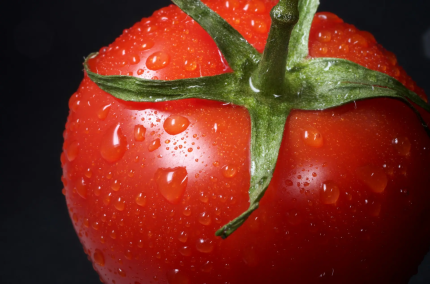
Tomatoes: Raw for Vitamin C, Cooked for Lycopene
Tomatoes are one of the best examples of why you shouldn't contrast raw and cooked vegetables.
Fresh tomatoes provide vitamin C and other nutrients. Some of the vitamin C is lost when heated.
At the same time, tomatoes are the main dietary source of lycopene, a red carotenoid.
Lycopene from cooked tomatoes, tomato paste, and sauces may be more readily absorbed than from fresh tomatoes. Studies in humans have shown higher absorption of lycopene after cooking tomato products.
A practical option is to use both forms regularly:
fresh tomatoes in salads;
stewed tomatoes;
tomato sauce;
baked tomatoes;
tomato paste as a component of dishes.
Adding a small amount of olive or other cooking oil may improve the absorption of carotenoids.
Carrots: Carotenoids become more available after cooking
The bright orange color of carrots is due to their high content of carotenoids, primarily beta-carotene, from which the body can produce vitamin A.
Raw carrots are still nutritious and contain fiber, but some of the carotenoids are found inside the dense plant structure.
Heating and chopping soften the cell walls, making the carotenoids more available for digestion. This is why the bioavailability of beta-carotene from cooked carrots may be higher.
Optimal methods:
steam cooking;
baking;
light stewing;
adding to soups;
short roasting.
A small amount of fat in the same meal helps with the absorption of fat-soluble carotenoids.
Raw carrots are also quite appropriate - for example, as a crunchy snack or an ingredient in a salad.
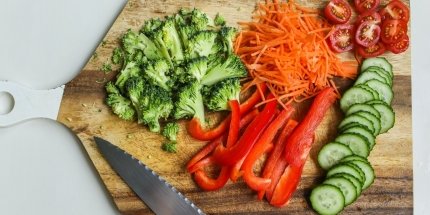
Red bell pepper: it is beneficial to eat raw
Sweet red peppers contain a significant amount of vitamin C.
Since this vitamin is sensitive to prolonged heating and can leach into water, raw pepper allows you to preserve its original content as much as possible.
It can be:
add to salads;
eat with hummus;
use in sandwiches;
add to cold snacks;
Serve as a vegetable side dish without heating.
This does not mean that stewed or baked peppers become “useless.” They retain their fiber, minerals, carotenoids, and other compounds.
If peppers are cooked, a short roasting or quick stir-frying usually serves the purpose of preserving sensitive nutrients better than prolonged boiling.
Broccoli: An Important Cooking Method
Broccoli contains vitamin C, folate, fiber, and glucosinolates.
Of particular interest is glucoraphanin, a substance from which sulforaphane can be formed with the participation of the enzyme myrosinase.
Myrosinase is activated when broccoli tissue is damaged during cutting or chewing. High temperatures can inactivate this enzyme.
Studies show that raw broccoli provides high bioavailability of glucosinolate breakdown products, while intensive cooking can reduce it. Brief steaming allows for partial preservation of this mechanism.
In practice, broccoli can:
eat raw if well tolerated;
steam for a few minutes;
to fry quickly;
Bake until the florets remain elastic.
Prolonged boiling to a very soft consistency is less beneficial in terms of preserving vitamin C, folate, and some phytochemicals.
Spinach: useful in two forms
In the case of spinach, choosing the only “right” option is especially impractical.
Raw leaves are good for obtaining vitamin C and folate without loss through heating and leaching into water.
After cooking, spinach shrinks dramatically in volume. Because of this, you can actually eat a much larger amount of greens on one plate than in the form of a raw salad.
Heating also destroys some of the cellular structures and may increase the availability of some carotenoids. At the same time, prolonged cooking reduces the levels of certain water-soluble substances.
A rational approach is to alternate:
raw spinach - in salads and sandwiches;
cooked - in omelets, soups, pasta, stews or as a side dish.
Cabbage: raw or lightly cooked
White and red cabbage are great for eating without cooking.
Raw cabbage preserves vitamin C and heat-sensitive substances well.
It can be used for salads, sandwiches, rolls and other cold dishes.
But you can also cook cabbage. Brief braising, quick sautéing, or steaming softens the texture and can make it more palatable for people who find large amounts of raw cabbage bloat-inducing.
The least beneficial option for preserving water-soluble nutrients is long cooking in a large amount of water followed by draining it.
If cabbage is used in soup, the situation is different: a person receives part of the substances that have passed into the water along with the broth.
Kale and other leafy greens: it's worth alternating methods
Kale, Swiss chard, and other dark green leafy greens contain carotenoids, folate, vitamins, and minerals.
Raw kale preserves heat-sensitive components well, but its dense leaves are not liked or tolerated well by everyone.
Short preparation:
softens the structure;
reduces volume;
makes it easier to use a large amount of greens in one dish;
may increase the availability of some carotenoids.
Prolonged high-temperature treatment is not required.
To absorb carotenoids, leafy greens are best served with a small amount of olive oil, avocado, nuts, or seeds.
Asparagus: best cooked briefly
Raw asparagus can be eaten if it is fresh and properly washed, but its fibrous texture usually becomes more palatable after a brief heat treatment.
Heating softens the cell walls, which may help release some of the carotenoids and other phytochemicals.
At the same time, asparagus contains folate and vitamin C, so long cooking is not optimal.
Better:
to steam;
to fry quickly;
bake;
grill without charring.
The finished asparagus should remain elastic and not turn into a very soft mass.
Onions: benefits are there both raw and cooked
Raw onions retain vitamin C and some heat-sensitive plant compounds better.
It is suitable for salads, sandwiches, sauces and cold appetizers.
When cooked, onions have a milder flavor and a texture that many people find more palatable. Moderate braising or sautéing does not strip the vegetable of all its nutritional value.
The most important thing is not to char the onion permanently at a very high temperature. For most dishes, cooking it until soft or lightly golden is sufficient.
Beets: can be eaten raw and cooked
Beets work well in both options.
Raw, it can be grated into a salad or thinly sliced. The product is not heat-treated and retains heat-sensitive substances.
Boiled or baked beets have a softer texture and a sweeter taste, while retaining fiber and much of the other components.
If beets are boiled, some of the water-soluble compounds can leach into the water. Baking or steaming avoids significant leaching.
Therefore, the choice can mostly be made based on taste and tolerance.
Zucchini and courgettes: both are fine
Young zucchini can be eaten raw — thinly sliced, shredded, or grated into a salad.
Brief roasting or baking softens the plant tissue and makes the product more digestible for some people.
There is no reason to believe that one of these options is fundamentally better.
If the main goal is to preserve water-soluble vitamins, you should avoid prolonged cooking in large amounts of water.
Potatoes: need to be cooked
Potatoes are significantly different from salad vegetables.
Its main carbohydrate component is starch, the structure of which changes when heated, making potatoes much more suitable for normal digestion.
Therefore, raw potatoes should not be considered a "healthier" alternative to boiled or baked ones.
Optimal everyday methods:
cooking;
baking;
steam cooking.
A separate issue is green or heavily sprouted tubers, which may have elevated levels of natural glycoalkaloids. Such parts should not be used as a regular food product.
What about mushrooms?
Mushrooms are not biologically vegetables, although in cooking they are often considered together with vegetable products.
Champignons are sometimes served raw, but the cooked form usually has a more pleasant texture, flavor, and fits more easily into hot dishes.
They can be:
stew;
bake;
to cook on the grill;
to fry quickly.
Prolonged boiling followed by pouring out the water can reduce the content of some water-soluble components.
Wild mushrooms have separate safety rules, and some species require mandatory special heat treatment. They cannot be evaluated according to the rules for cultivated champignons.
Which method of cooking vegetables best preserves nutrients?
There is no universal winner, but several patterns repeat across studies.
Steam cooking
One of the most gentle options.
The vegetables are heated but not directly in the water, which means that fewer water-soluble vitamins and plant compounds are leached into the liquid.
Scientific reviews often note steaming as a good method for preserving or making some of the polyphenols, glucosinolates, and folates available.
Quick frying
Brief cooking with a small amount of oil can work well for carrots, peppers, zucchini, onions, and greens.
Oil also promotes the absorption of fat-soluble carotenoids.
It is important not to turn a short sauté into a long frying at a very high temperature.
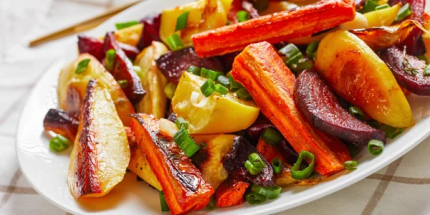
Baking
Baking preserves many nutrients because they don't turn into water.
Suitable for:
carrots;
beetroot;
tomatoes;
pepper;
pumpkins;
asparagus;
potatoes;
cauliflower.
Prolonged baking until very dry is not necessary to obtain these benefits.
Cooking
Boiling is convenient, but may be less beneficial for water-soluble substances.
The more water, the smaller the pieces of produce, and the longer the cooking time, the greater the potential for leaching of vitamin C and folate.
If liquid remains part of a dish—for example, in a soup or vegetable stew—some of the substances that have passed into the water are also consumed.
Do you need to add oil to vegetables?
For some vegetables, a small amount of fat makes sense.
Carotenoids are fat-soluble. Therefore, a salad with tomatoes, carrots, spinach, or red peppers may be advisable to supplement with a source of fat:
olive oil;
nuts;
seeds;
avocado.
This does not mean that vegetables need to be generously covered in oil. For the absorption of fat-soluble substances, it is enough to have a moderate source of fat in your diet.
Do cooked vegetables become "empty"?
No.
Even if the content of one vitamin has decreased during cooking, the product does not turn into a food without nutritional value.
Cooked vegetables contain:
cellulose;
minerals;
some vitamins;
carotenoids;
polyphenols;
other plant compounds.
Additionally, heating may increase the availability of some phytochemicals. In studies, different cooking methods have yielded very different results, so the simple rule that “raw is always better” is not supported by scientific evidence.
When raw vegetables may not be the best option
A large amount of raw vegetables is not suitable for everyone.
In some people, they can cause:
bloating;
feeling of fullness;
increased gas formation;
abdominal discomfort.
After a short cooking, the plant tissue becomes softer, so some vegetables are more easily tolerated.
The method of processing also matters for food safety. Fresh vegetables that are eaten raw should be washed thoroughly. A special category is raw sprouts of alfalfa, radish, mung bean, and other crops. The warm and humid environment in which they are grown is favorable for the reproduction of bacteria, so pregnant women and other groups at increased risk of foodborne infections are recommended to avoid raw sprouts and consume them after sufficient heat treatment.
A short cheat sheet: which vegetables are best to eat
| Product | Raw | Prepared | Practical choice |
| Tomato | more vitamin C is retained | higher availability of lycopene | rotate |
| Carrot | fiber, carotenoids | carotenoids are more available | easy to cook more often |
| Red pepper | Vitamin C is well preserved | some vitamin C is lost | more often raw |
| Broccoli | active myrosinase | short steam preserves some of the compounds well | raw or lightly steamed |
| Spinach | more heat-sensitive vitamins | smaller volume, more available some carotenoids | rotate |
| Cabbage | Vitamin C is well preserved | milder and often easier to tolerate | raw or cooked briefly |
| Kale | heat-sensitive compounds are stored | softer structure | rotate |
| Asparagus | can be eaten raw | more pleasant texture, some substances are more accessible | to cook briefly |
| Onion | more heat-sensitive compounds | milder taste and texture | both options |
| Beet | without heating losses | softer and more convenient in dishes | both options |
| Zucchini | suitable for salads | softer structure | both options |
| Potato | not recommended | starch becomes more digestible | prepare |
Conclusion
There is no need to switch your diet entirely to raw vegetables or, conversely, give up fresh salads.
It is especially beneficial to eat vegetables raw, when it is important to preserve vitamin C and other heat-sensitive substances. This group includes sweet peppers, some cabbages, and leafy greens.
Moderate cooking is beneficial for foods rich in carotenoids: tomatoes, carrots, and some dark green vegetables. However, short steaming, baking, and quick braising often preserve nutrients better than long boiling in large amounts of water.
The most practical principle is variety. A salad of fresh vegetables, cooked carrots, tomato sauce, steamed broccoli, and baked vegetables provide the body with different sets of nutrients in forms with different bioavailability.
FAQ
Which is healthier - raw or cooked vegetables?
There is no clear answer. Raw vegetables retain some of the vitamin C and folate better, while heating may increase the availability of carotenoids. It is optimal to consume vegetables in a variety of forms on a regular basis.
What vegetables are best eaten raw?
Good options include red bell peppers, tomatoes, cabbage, some leafy greens, baby zucchini, and some other vegetables that are safe to eat raw and well-tolerated.
Which vegetables become healthier after cooking?
Carotenoids in carrots may become more available after heating, and lycopene is better absorbed from heat-treated tomatoes. For spinach and other greens, cooking may also increase the availability of some carotenoids.
Are all vitamins destroyed during cooking?
No. Different vitamins have different resistances. Some water-soluble substances are the most sensitive, including vitamin C and folate. Minerals are not "destructed" by heating, although some may leach into the water.
Which is better: boiling or steaming vegetables?
To preserve many water-soluble nutrients, steaming is often more beneficial because the vegetables are not in direct contact with large amounts of water.
Are microwaved vegetables healthy?
Yes. The very principle of using microwaves does not make vegetables any less healthy. Short cooking with a small amount of water can preserve certain vitamins well compared to long cooking.
Do I need to add oil to carrots and tomatoes?
A small amount of dietary fat can help with the absorption of carotenoids, as they are fat-soluble. Fat sources can include olive oil, avocados, nuts, or seeds.
Can you eat broccoli raw?
Yes, if the product is fresh, thoroughly washed, and well tolerated. Raw broccoli retains the activity of the myrosinase enzyme. An alternative is brief steaming.
Do vegetables lose their benefits after baking?
No. Some heat-sensitive substances may be reduced, but fiber, minerals, and many other compounds are preserved. For some carotenoids, heating even improves bioavailability.
Can I get enough benefits if I don't like raw vegetables?
Yes. Cooked vegetables remain an important part of a healthy diet. You can use steaming, baking, short braising, and other gentle methods, and get your vitamin C from fruits or vegetables that are comfortable to eat fresh.
undefined

