
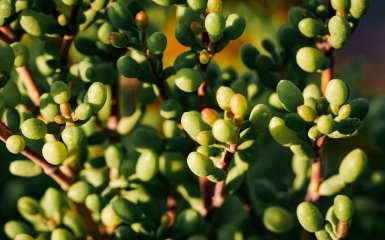
Money tree usually has dense, smooth and elastic leaves. Therefore, when it suddenly becomes soft, shrivels or begins to fall off, this often indicates a violation of growing conditions. The most difficult thing is that the same external signs can occur for opposite reasons.
Money tree leaves most often lose their elasticity due to lack of moisture or excessive watering. In the first case, the plant uses up its accumulated water reserves, in the second, its roots can be damaged due to overwatering and cease to absorb moisture normally.
That's why you shouldn't water your succulent as soon as its leaves become soft. If the soil remains wet, additional water can accelerate root rot.
Let's consider how to determine the cause of the problem based on the condition of the leaves, soil, and stem, when you need to transplant a money tree, and what to do if the plant begins to wilt in the fall or winter.
Why does the money tree lose its leaves elasticity?
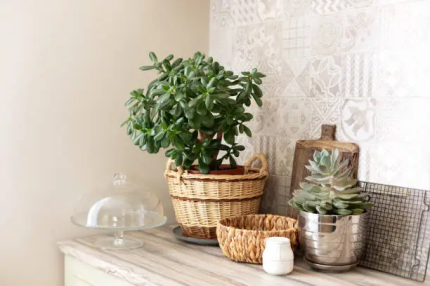
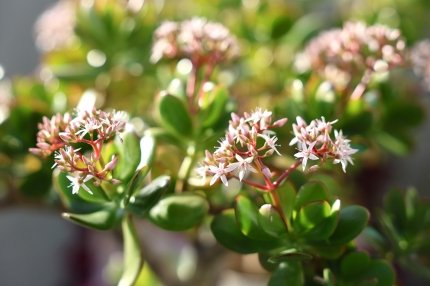
Money tree, or oval-shaped sphagnum (Crassula ovata), belongs to succulents - plants that are able to accumulate water in their own tissues.
Its natural environment is associated with the relatively dry conditions of southern Africa. That is why the krasula is well adapted to periods without precipitation, but does not tolerate prolonged waterlogging of the root system.
Fleshy leaves act as a natural reservoir of moisture. When there is enough water, the cells maintain internal pressure, called turgor, which keeps the leaf blade elastic.
If a plant loses more water than it gains, turgor decreases. The leaves gradually become thinner and may shrivel.
However, the roots of the krasula need not only moisture, but also air access.
In a constantly wet, dense substrate, the roots can suffer from a lack of oxygen, become damaged and rot. As a result, the plant loses its ability to provide water to the leaves, even though the soil itself remains moist.
So, soft leaves do not always mean that the money tree is not getting enough water. For a proper diagnosis, you need to assess its condition along with soil moisture and root health.
How to determine the cause of the problem by the appearance of the leaves
Before saving a fat plant, it is worth carefully examining the plant.
The thickness of the leaf, its color, the presence of spots, the condition of the stem, and the rate of fall are all important.
| Sign | Possible cause | What to check |
| The leaves are thin, wrinkled, flexible. | Prolonged water shortage | Has the substrate dried out to its full depth? |
| The leaves are soft, watery, sometimes translucent. | Excessive hydration | Is the water stagnating in the pot? |
| The leaves are wrinkled, but the ground is wet. | Root damage | Root system condition |
| Leaves turn yellow and fall off en masse | Overflow, stress or root problems | Humidity, temperature, stem |
| The leaves have dark watery spots | Cold damage or rot | Was the plant overcooled? |
| The leaves turn pale, the shoots stretch out | Insufficient lighting | Pot location |
| There is plaque, insects or cobwebs on the leaves | Possible pests | Underside of leaves and axils |
A single symptom does not allow us to establish the cause with absolute accuracy.
For example, leaves can fall due to improper watering and after a sharp drop in temperature.
Therefore, the next step is to check the conditions in which the krasula grows.
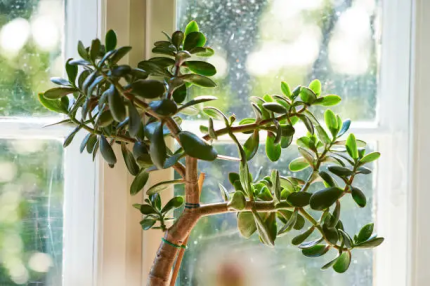
Reason #1. The money tree hasn't been watered for a long time.
Despite its drought tolerance, the fat plant cannot do without water indefinitely.
During prolonged drought, the plant gradually uses up the reserves accumulated in the leaves and stems.
Initially, the leaves lose their characteristic thickness. Then they may become flexible, wrinkled, and less shiny.
If it dries out significantly, some of the leaves may fall off.
How to understand that the reason is precisely the lack of water
Pay attention to the combination of three signs:
The soil is dry not only on top, but also deep in the pot.
The leaves look wrinkled and thinner than usual.
The trunk remains firm, without wet dark areas.
If the krasula grows in a very light substrate, water sometimes runs along the walls of the pot, almost not moistening the dry earthen lump.
Therefore, the mere presence of water in the pan does not always mean that the roots have received enough moisture.
How to properly restore watering
If there are no signs of rot, you can carry out normal full watering.
Gradually moisten the substrate with room temperature water until the excess begins to drain through the drainage holes.
After that, let the water drain and be sure to empty the tray.
If the soil is so dry that it does not absorb water well, it can be moistened gradually in several stages.
There is no need to water the pot multiple times in one day. After watering, it is important to give the substrate time to dry out properly.
If the root system remains healthy, the elasticity of some of the leaves may gradually recover. However, severely damaged leaves do not always return to their original appearance.
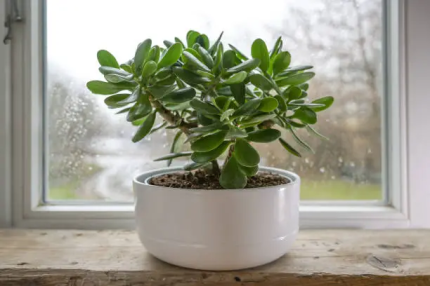
Reason #2. Excessive watering and water stagnation
Overflow is one of the most dangerous problems when growing krasula.
Unlike many tropical houseplants, the fat plant does not require constantly moist soil.
Its root system develops better in a substrate that quickly lets water through and has enough air pores.
If you water the plant too often, the soil does not have time to dry out.
Under such conditions, roots can gradually lose their viability.
What does a fat woman look like?
Typical signs of overhydration:
The leaves become excessively soft or watery.
Individual leaves turn yellow and fall off.
The substrate remains wet for many days.
Dark areas may appear near the base of the stem.
The plant loses stability in the pot.
It is important to distinguish between natural lignification of the trunk and rotting.
In an adult money tree, the lower part of the stem gradually becomes brown and hard. This is a normal process.
Instead, a soft, darkened, watery base of the trunk is a worrying sign.
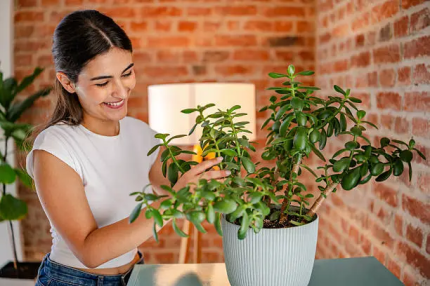
What to do if the money tree has been transplanted
First of all, stop watering and check to see if the pot is standing in water.
If the stem is firm, the leaves are mostly healthy, and the substrate is only temporarily too wet, sometimes it is enough to allow it to dry out normally.
However, if the leaves continue to turn yellow, the plant loses its stability, or the soil remains wet for a long time, you need to check the roots.
Do not try to correct the overflow by applying fertilizers, growth stimulants, or additional spraying.
None of these methods eliminate excess moisture near the roots.
Reason #3. Root rot
Root rot is a more serious situation than a one-time overwatering.
According to plant disease specialists at Oregon State University, overwatering is the main factor associated with root and stem rot in Crassula.
Under certain conditions, damaged tissues can be affected by root rot pathogens, in particular representatives of the Pythium and Phytophthora genera.
How to check the root system
Carefully remove the plant from the pot, trying not to damage the healthy roots.
Inspect the earthen lump and accessible areas of the root system.
Healthy roots are usually quite resilient and do not fall apart from a light touch.
Damaged ones may be dark, soft, and easily detached.
Brown color in itself is not an absolute sign of disease. It is also important to evaluate the structure of the tissues.
If the roots are softened and the base of the stem is dark, the likelihood of rot increases.
How to save a krasula with damaged roots
In case of confirmed rot, proceed as follows:
Carefully remove the old, overmoistened substrate.
Cut off any obviously rotten roots with a clean, disinfected tool.
Inspect the base of the stem and make sure that healthy tissue is preserved.
Prepare a clean pot with drainage holes.
Use fresh, breathable succulent substrate.
After transplanting, avoid overwatering, especially while damaged roots are recovering.
If a significant portion of the root system is destroyed, the chances of recovery are reduced.
In such a situation, it is also advisable to save a few healthy shoots for propagation.
Important: transplanting does not guarantee the plant will be saved if the rot has already spread inside the main stem.
Reason #4. Incorrectly selected soil and pot
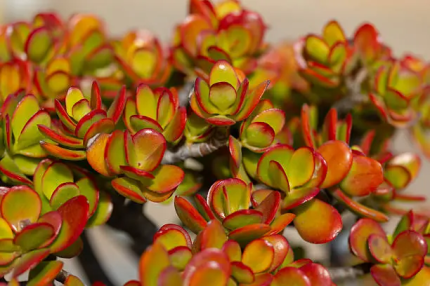
Even with moderate watering, the money tree can suffer if the substrate is too dense.
Ordinary all-purpose soil sometimes contains a lot of small organic particles that retain moisture for a long time.
In a large pot, such a mixture may dry out even more slowly, especially in the fall and winter.
As a result, the roots are in conditions of constant moisture.
What soil is suitable for a money tree?
It is most convenient to use a ready-made mixture for cacti and succulents with good drainage properties.
If necessary, its structure can be improved by adding mineral components - perlite, pumice, or suitable fine gravel.
The main requirement is not a specific percentage of sand or perlite, but that the substrate be water-permeable and not remain waterlogged for long.
At the same time, too much soil in a small pot can dry out faster than the roots can absorb water.
Therefore, the composition of the soil must be coordinated with the size of the plant and the conditions of its maintenance.
Are drainage holes necessary?
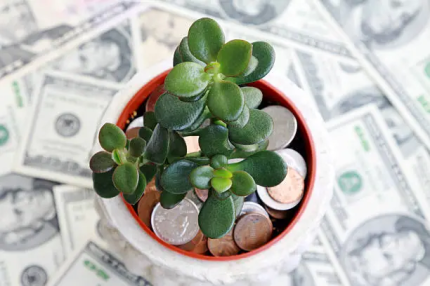
For the beauty, it is best to use a pot with holes in the bottom.
They allow excess water to drain out of the container after watering.
A layer of expanded clay at the bottom is no substitute for full drainage holes. If water cannot leave the pot, the lower layers of the substrate may still remain waterlogged.
You should also not transplant a small fat plant immediately into a much larger pot.
Excess soil that the roots have not yet mastered can retain moisture for a long time.
Reason #5. Insufficient lighting
The money tree belongs to the light-loving houseplants.
With a lack of light, its growth may slow down and the shoots may stretch out.
New leaves sometimes become smaller, and the distance between them increases.
This condition is called etiolation - a change in growth pattern due to insufficient light.
Although lack of light is not the most common direct cause of soft leaves, it can worsen the overall condition of the plant.
The combination of low lighting and frequent watering is especially dangerous.
In a dark room, the plant uses less water and the substrate can dry out more slowly.
Where is it better to put a money tree?
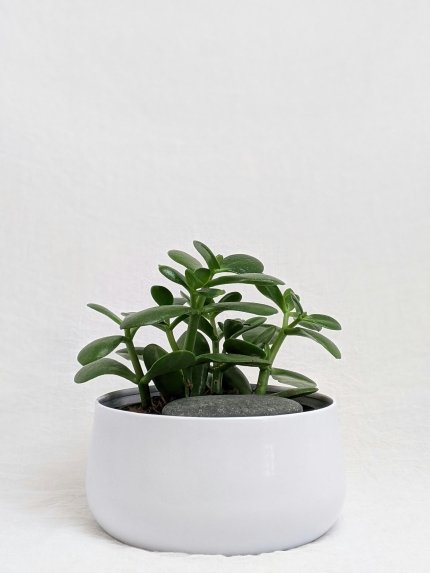
A well-lit windowsill is usually suitable for a beauty.
South, southeast, and west-facing windows can provide enough light, but specific conditions depend on the season and shading by buildings.
If the plant has been in a dark place for a long time, you should not immediately move it into intense direct sunlight.
A sudden change in lighting can cause leaf burns.
It is better to accustom a fat woman to brighter light gradually.
In rooms with insufficient natural light, you can use appropriate lighting for plants.
Reason #6. Cold, drafts and sudden temperature changes
Crassula may react poorly to hypothermia, especially if the soil in the pot remains wet.
In the fall and winter, this often happens on window sills next to cold glass.
After airing, the temperature near the plant may temporarily be significantly lower than in the rest of the room.
Cold damage sometimes manifests as watery spots, darkening of tissues, or sudden leaf drop.
Freezing is especially dangerous.
What temperature is suitable for a beauty?
According to the Royal Horticultural Society, the money tree grows well at normal room temperatures, around 18–24 °C during the day.
During winter storage, it is advisable to protect it from temperatures below 10 °C, especially with high substrate humidity.
However, the need for watering at 12 °C and 24 °C will be significantly different.
The cooler the conditions and the slower the growth, the more careful you need to moisten the soil.
Do not place the pot directly next to a radiator or in a place where cold air is constantly blowing on the plant.
Reason #7: Pests and leaf damage
If watering conditions are normal, the roots are healthy, but the leaves are gradually weakening, it is worth checking the plant for pests.
The money tree can be affected by mealybugs, scale insects, and spider mites.
They feed on plant sap and can cause weakening, spotting, and premature leaf drop.
How to spot pests on a krasula
Mealybugs often appear as small white, cottony clumps in the leaf axils.
Scales may resemble small, immobile brown growths on stems.
Spider mites are very small. Their presence is sometimes indicated by light dots on the leaves and a thin web.
It is necessary to examine not only the upper surface of the leaves, but also the underside, the branching points, and the base of the shoots.
If pests are detected, it is better to temporarily separate the plant from other pots.
The treatment method must be chosen taking into account the type of pest and the permitted use of the corresponding product.
Do not apply concentrated alcohol, aggressive detergents, or random homemade mixtures to the leaves uncontrollably: they can cause additional damage.
How to check your money tree in five minutes
To avoid making mistakes with your first steps, conduct a brief diagnosis.
The first step is to test the soil. Carefully dip a wooden stick into the substrate or use another method to check the moisture level at depth. A dry top layer does not guarantee that there is no water below.
The second step is to assess the leaves. Thin and shriveled leaves are more likely to indicate a lack of water, while watery and translucent leaves may indicate overwatering or tissue damage.
Step three: Inspect the stem. A firm brown stem is normal for a mature plant. Soft, dark areas near the base need attention.
Step four: Check the pot. Are there drainage holes? Is there any liquid remaining inside the decorative planter?
Step five: Think about recent changes. Perhaps the plant was moved, it got colder, or you started watering it more often after a long break.
Based on the results of such an inspection, it can be determined whether it is enough to adjust the care or whether the roots need to be checked.
What to do if the leaves of the money tree are soft and falling off
Leaf fall can be both a natural process and a signal of problems.
In an adult beauty, individual old lower leaves gradually die off.
If the new leaves are healthy and the stem is firm, there may be no reason for emergency action.
Another situation is a massive decline in a short time.
Especially if the leaves turn yellow, become watery, or fall off after a light touch.
In this case, it is important to first check the moisture content of the substrate and the condition of the root system.
If the leaves fall after being on a cold windowsill, it is worth assessing possible temperature damage.
It is not necessary to change watering, soil, lighting and feeding at the same time if the cause is not yet known. A large number of sudden changes can make it difficult for the plant to recover.
How to save a money tree if the trunk has become soft
Softening of the main stem is a more dangerous sign than the loss of elasticity of individual leaves.
If the tissues at the base have darkened and become watery, the damage may have spread from the roots to the stem.
In this case, simply reducing watering may not be enough.
Carefully inspect the plant and determine if any healthy, solid areas remain.
If the lower part of the trunk is rotten, but the upper shoots are not yet damaged, you can try to propagate the beauty with cuttings.
How to root a healthy shoot
Choose an undamaged part of the stem with resilient leaves.
Cut it off with a clean tool above the affected area.
Leave the cutting in a dry, shaded place for a few days to allow the cut surface to dry.
After that, plant it in a light substrate for succulents.
At the initial stage, it is especially important to avoid constant dampness.
Propagation by cuttings is most convenient during the period of active growth, when there is enough light and warmth.
Even if the main plant cannot be saved, a healthy shoot can give rise to a new money tree.
How to properly water a money tree in autumn and winter
With the onset of the cold season, the conditions for growing buttercups change significantly.
Daylight hours become shorter, and plant growth often slows down.
Because of this, the need for water usually decreases.
In autumn and winter, Krasula is watered more carefully than during the period of active growth.
However, there is no universal rule like "once every 14 days".
A plant on a warm, sunny windowsill can use water faster than a fat plant in a cool room.
The drying rate is also affected by the size of the pot, the composition of the soil, and the volume of the root system.
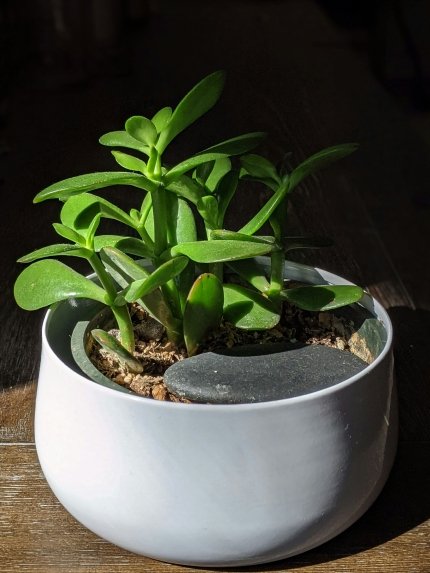
How to understand that it is time to water
The best guide is the actual condition of the substrate.
For the beauty, it is important that the soil dries well between waterings.
At the same time, you should not expose the plant to prolonged severe dehydration, when all the leaves become shriveled.
If the soil is still wet, it is better to postpone watering.
When the substrate has dried out and the plant needs water, moisten it evenly and let the excess drain.
Do not leave water in the tray.
Can I spray a money tree if the leaves are wilting?
A common mistake is to try to restore the elasticity of the leaves by regular spraying.
Crassula is not a houseplant that requires constant high humidity.
Its thick leaves are adapted to storing water, not to living in conditions of constant dampness.
According to the recommendations of the Royal Horticultural Society, normal room humidity is usually sufficient for a money tree.
Spraying does not replace normal root nutrition and does not eliminate root rot.
If the leaves are soft due to overdrying, the plant needs proper substrate moisture.
If the cause is damaged roots, additional moisture on the leaves will not solve the problem.
To remove dust, it is better to carefully wipe the leaves with a soft, slightly damp cloth without damaging their surface.
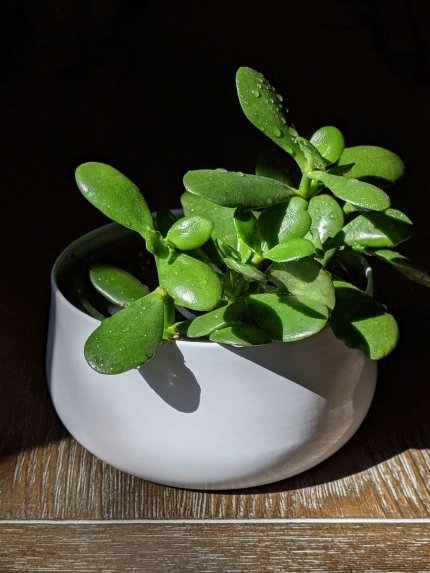
Is it necessary to feed Krasula when the leaves become soft?
Loss of leaf elasticity is most often not a direct sign of a lack of fertilizer.
Therefore, fertilizing should not be the first action after a problem appears.
If the roots are damaged or the substrate is too wet, applying fertilizer will not restore the plant's ability to absorb water.
On the contrary, an excess of salts in the soil can create additional stress on a weakened root system.
It is more advisable to feed the krasula during the period of active growth, when it is healthy and has normal lighting and watering conditions.
You can use fertilizers intended for cacti and succulents, according to the manufacturer's instructions.
During the cold season, when growth is slowed, the need for fertilization usually decreases.
Is it necessary to transplant a money tree immediately after the appearance of soft leaves?
No. Soft leaves alone are not a sufficient reason to repot.
If the plant is simply dry, the roots are healthy, and the substrate has normal drainage properties, repotting can create unnecessary stress.
However, if there is confirmed rot or persistent water stagnation, substrate replacement may be necessary.
The most convenient time for a planned transplant is spring, when more active growth begins.
Young plants may need to be repotted more often, while adults may only need to be repotted after the roots have taken up the available space or the soil properties have deteriorated.
There is no need to automatically increase the size of the pot every year.
Crassula can grow well in a relatively compact container.
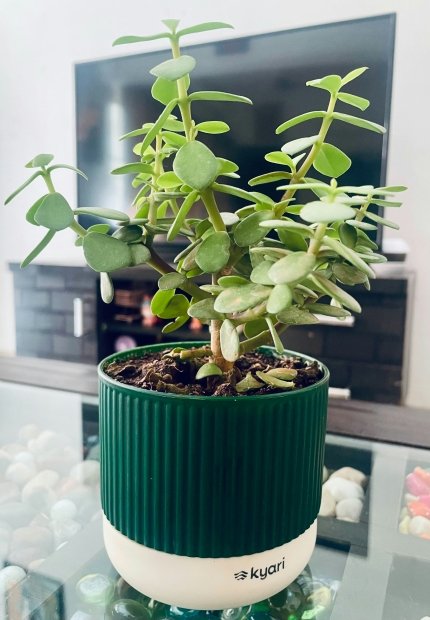
How long does it take for a money tree to recover?
The recovery time depends on the cause of the problem and the extent of the damage.
After moderate drying, a healthy plant can gradually restore leaf elasticity after proper watering.
However, old leaves that have lost a lot of water do not always return to their original shape.
In the case of root rot, the situation is more complicated.
Even after removing damaged tissues, the plant needs time to form new roots.
The first signs of improvement may not appear immediately.
It is more important to assess the condition of new shoots, the absence of rot spread, and the gradual stabilization of the plant.
It should not be considered a failure if the damaged leaves do not become perfect again. They may have lost their ability to fully recover.
How to prevent money tree leaves from softening
The best prevention is stable conditions that meet the natural needs of the succulent.
To do this, it is enough to follow a few basic principles:
Grow the plant in a well-drained substrate.
Use a pot with drainage holes.
Water after the soil has dried sufficiently.
Provide bright lighting.
Do not leave the plant in a cold draft.
Reduce watering during periods of slow growth.
Periodically check the leaves and stems for pests.
It is especially important not to set a strict watering schedule without taking into account the conditions in the apartment.
The money tree does not require constant attention, but it reacts poorly to regular care errors.
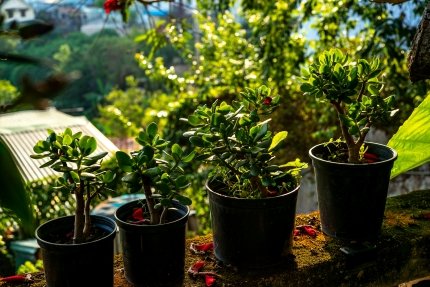
What mistakes should be avoided?
Most often, the owners of the beauty try to save it with excessive amounts of water.
However, soft leaves are not a universal signal of thirst.
You should also not use pots without holes, plant a small plant in a container that is too large, or place it in a dark corner.
Another common mistake is to abruptly move a weakened succulent from a cool place to bright, direct sunlight.
Such a move can create additional stress.
It is more useful to change conditions gradually, unless the situation requires immediate elimination of rot or hypothermia.
Is the money tree safe for cats and dogs?
When transplanting or pruning a fat plant, it is important to consider the safety of pets.
According to the American Society for the Prevention of Cruelty to Animals (ASPCA), Crassula ovata is a plant that is toxic to cats and dogs if eaten.
Possible symptoms include vomiting, lethargy, and incoordination.
Therefore, the pot and cut parts of the plant should be kept in places inaccessible to pets.
If the animal has eaten part of the krasula, you should contact a veterinarian.
Conclusion
Soft leaves on a money tree are a signal that needs to be checked, but do not always indicate a serious illness.
Most often, the problem is associated with improper watering. An overdried succulent gradually depletes its water reserves, and an overwatered one may lose its ability to absorb moisture due to root damage.
To properly help the plant, you must first check the moisture content of the substrate, the condition of the stem and root system.
The main rule of caring for a krasula is: do not water it just because the leaves have become soft. First, you need to understand whether the plant lacks water or is already suffering from an excess of it.
FAQ: Frequently Asked Questions about Soft Money Tree Leaves
1. Why does the money tree have soft and wrinkled leaves?
The most common cause is a lack of water or root damage due to overwatering. If the soil is completely dry and the stem is hard, it is likely overdrying. If the soil is wet, it is worth checking the condition of the root system.
2. What to do if the money tree has become soft after watering?
First, check the soil moisture and the condition of the stem. If the soil remains wet, do not water again. If waterlogged leaves appear, the base of the stem darkens, or there is mass wilting, the roots should be inspected.
3. Why does a money tree shed healthy-looking leaves?
Causes may include sudden changes in temperature, improper watering, root damage, or other stress factors. Individual old lower leaves may fall off naturally, but mass shedding requires checking the conditions of detention.
4. How do you know if a money tree is rotting?
Rot can be indicated by a soft dark base of the stem, softened roots, yellowing leaves and prolonged stagnation of water in the substrate. Hard brown bark on an adult trunk is not a sign of disease in itself.
5. Can a money tree without roots be saved?
Sometimes yes. If healthy, hard shoots are preserved, they can be cut, the cut areas dried and tried to root in a suitable substrate. Success depends on the condition of the tissues and growing conditions.
6. How often should you water a money tree in winter?
There is no fixed interval. The frequency depends on temperature, lighting, pot size, and how quickly the substrate dries out. In winter, the fat plant usually needs much less water than during the period of active growth.
7. Why are the leaves of the krasula soft, even though the ground is wet?
A possible cause is damage to the root system, which prevents the plant from absorbing water properly. You should also check the temperature and condition of the base of the stem. Additional watering in this situation can worsen the problem.
8. Do I need to spray the money tree to restore its leaves?
No, regular spraying is not a necessary condition for caring for a krasula. It does not eliminate dehydration due to dry substrate and does not help restore damaged roots.
9. Why does the money tree wither in the fall?
In autumn, daylight hours shorten and the plant's growth rate often slows down. If you continue with the summer watering regime, the substrate may remain too wet. Also, the condition of the plant can be affected by cold drafts and temperature changes.
10. Can I transplant a money tree in November?
It is best to carry out a planned transplant in the spring. However, if the substrate is overmoistened, the roots are rotting, or the plant is in an unsuitable pot, transplanting may be justified regardless of the season. In this case, it is important to provide warmth, sufficient lighting, and careful watering.

