
The body needs iodine in very small amounts, but without it, the thyroid gland cannot synthesize thyroid hormones normally. They are involved in the regulation of metabolism, body temperature, the functioning of the cardiovascular and nervous systems, and are critically important for brain development during pregnancy and early childhood.
Points of attention
- The main sources of iodine for the body are: iodized salt, sea fish, dairy products, eggs, and seaweed.
- A balanced diet and regular consumption of iodized salt are necessary to prevent iodine deficiency.
- Pregnant, breastfeeding women and children need more iodine for normal brain and nervous system development.
The body does not produce iodine on its own, so it must be regularly supplied with food. The main sources are iodized salt, sea fish and seafood, dairy products, eggs and some seaweed. At the same time, the principle “the more iodine, the better” is dangerous: its excess can also disrupt the function of the thyroid gland.
For most people, the best prevention of iodine deficiency is a varied diet and the use of iodized salt instead of regular salt, rather than taking high doses of iodine on your own.
The material is for informational purposes only. Self-medication can be harmful to health. If you suspect iodine deficiency, thyroid disease, during pregnancy, breastfeeding, or before taking iodine supplements, you should first consult a doctor.
Why does the body need iodine?
Iodine is a component of thyroid hormones — thyroxine T4 and triiodothyronine T3. They affect a large number of physiological processes: energy metabolism, nervous system, heart function, thermoregulation, growth and development.
Iodine is particularly important during pregnancy and early childhood. Thyroid hormones are necessary for the normal development of the central nervous system and brain of the fetus and infant. That is why pregnant and breastfeeding women have a higher need for iodine.
A prolonged iodine deficiency can cause an enlarged thyroid gland — a goiter — and lead to insufficient production of thyroid hormones.
How much iodine is needed per day?
The need depends on age and physiological condition.
Approximate daily values are:
| Group | Iodine requirement |
| Children 1–8 years old | 90 mcg |
| Children 9–13 years old | 120 mcg |
| Teenagers from 14 years old | 150 mcg |
| Adults | 150 mcg |
| Pregnant women | about 220–250 mcg |
| Breastfeeding | about 250–290 mcg |
Different authoritative organizations use slightly different guidelines for pregnancy and lactation. For example, the US guidelines suggest 220 mcg during pregnancy, while the WHO uses a guideline of around 250 mcg per day.
For an adult, the requirement of 150 mcg is only 0.15 mg. However, getting this small amount regularly is more important than occasionally consuming foods with extremely high iodine content.
Why does iodine deficiency occur?
The iodine content in common plant foods depends largely on the soil, so vegetables and fruits cannot be considered a stable source of it.
People who are at increased risk of insufficient intake are:
do not use iodized salt;
almost no saltwater fish and seafood are eaten;
do not consume dairy products and eggs;
adhere to a strict vegan diet;
have an increased need for iodine during pregnancy and lactation;
live in regions with low natural iodine content in the soil.
The NIH specifically identifies people who do not use iodized salt, pregnant women, and those who have eliminated seafood, dairy products, and eggs from their diets as at-risk groups.
The problem also remains relevant for Ukraine: the Public Health Center recommends using iodized salt as a simple way to prevent iodine deficiency.
1. Iodized salt is the easiest source of iodine
For mass prevention of deficiency, the most important product is not exotic seaweed, but ordinary iodized salt.
The WHO considers universal iodization of table salt to be the primary strategy for the prevention of iodine deficiency. The advantage of this approach is that small amounts of salt are consumed regularly and the iodine content can be standardized.
But there is an important nuance: to obtain iodine, you do not need to increase the amount of salt.
The WHO recommends that adults consume less than 5 g of salt per day. Therefore, the principle is as follows: less salt, but if it is used, it is better to choose iodized salt .
When buying, check for the label “iodized.” Sea, Himalayan, rock, or other specialty salt may not necessarily contain enough iodine unless it has been specially fortified.
2. Marine fish and seafood
Marine fish is one of the most reliable natural sources of iodine.
White saltwater fish can be particularly high in iodine. For example, the NIH lists about 3 ounces of baked cod as containing about 146 mcg of iodine, nearly the entire daily requirement for an adult. Actual values may vary depending on the species, where it was caught, and other factors.
Sources of iodine can be:
cod;
hake;
pollock;
grouper;
shrimp;
mussels;
oysters;
other marine mollusks.
Tuna also contains iodine, but it should not be the only fish in the diet due to the methylmercury content in some types. It is much more practical to alternate different types of seafood.
You don't need to eat saltwater fish every day specifically for iodine. Regularly including it in a varied diet, along with iodized salt and other sources, helps maintain adequate intake of the trace element.
3. Milk, yogurt and dairy products
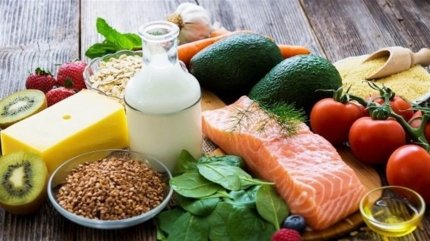
Dairy products can provide a significant portion of your daily iodine needs.
According to the NIH, a cup of milk can contain about 84 mcg of iodine, and a serving of plain Greek yogurt can contain about 87 mcg. However, these are approximate figures: the iodine content depends on the animals' diet and production technology.
Practical sources are:
milk;
natural yogurt;
kefir;
sour milk cheese;
some hard cheeses.
An important nuance for people who have switched to plant-based "milk": almond, oat, soy, and other plant-based drinks are naturally not equivalent to cow's milk in terms of iodine content.
Unless the manufacturer has specifically fortified the product with iodine, the amount may be very low. Therefore, if you completely avoid dairy products, you should pay more attention to other sources.
4. Eggs
Eggs are a convenient additional source of iodine, especially for people who rarely eat sea fish.
One large boiled egg contains approximately 30 mcg of iodine, which is about a fifth of an adult's daily requirement. Most of it is in the yolk.
This means that eggs are unlikely to meet all of your iodine needs on their own, but they work well as one element of a varied diet.
For example, throughout the day, sources of iodine can include an egg for breakfast, yogurt, a little iodized salt in food, and fish for dinner.
It is the sum of regular sources that is more important than finding one "richest" product.
5. Seaweed — high in iodine, but caution is needed
Laminaria, nori, wakame, and other seaweeds are often touted as the best source of iodine. In terms of concentration, this may indeed be the case.
The problem is that the iodine content in seaweed is extremely unstable.
According to the NIH, in commercial algae, its concentration can vary hundreds of times — from tens to several thousand micrograms per gram.
Therefore, algae should not be used on the principle of "the more, the better."
You need to be especially careful with:
kelp;
kombu;
concentrated algae powders;
kelp supplements;
products without clearly stated iodine content.
Nori typically contains less iodine than some brown seaweeds, but the exact amount still depends on the specific product.
Daily consumption of large portions of highly concentrated algae can provide not only preventive, but also excessive amounts of iodine.
Do you really need to eat all these foods every day?
No.
The phrase "foods you should eat every day" does not mean that fish, seaweed, eggs, milk, and iodized salt should be on the table every day.
It is important to get iodine regularly, but the diet is evaluated as a whole.
For example:
Breakfast: egg and natural yogurt.
Lunch: a regular balanced meal prepared with a moderate amount of iodized salt.
Dinner several times a week: sea fish.
This model may be sufficient without daily use of kelp or special supplements.
Is there iodine in fruits, vegetables and nuts?
Yes, there may be small amounts, but their content depends greatly on the soil and growing conditions.
That is why apples, persimmons, feijoa, walnuts, or spinach should not be used as a guaranteed replacement for iodized salt, sea fish, or other reliable sources.
A particularly popular myth concerns feijoa. This fruit may contain iodine, but its concentration is unstable and does not allow feijoa to be counted as an accurate daily source of the trace element.
The same goes for walnuts.
Eating these foods is beneficial as part of a varied diet, but they should not be used to treat iodine deficiency.
How to understand that you are deficient in iodine
It is impossible to accurately determine the deficiency based on how you feel.
With prolonged significant deficiency, the thyroid gland may enlarge. If hypothyroidism develops due to iodine deficiency, the following are possible:
fatigue;
drowsiness;
decreased working capacity;
intolerance to cold;
dry skin;
constipation;
change in body weight;
impaired concentration.
But these symptoms are nonspecific. They can occur with dozens of other conditions, so it's impossible to conclude "I'm iodine deficient" just from fatigue or hair loss.
Goiter is one of the most characteristic manifestations of long-term iodine deficiency, but thyroid diseases can have other causes.
Can I start drinking iodine on my own?
High doses of iodine should not be taken without an established need.
Iodine is a typical example of a substance for which both deficiency and excess can be dangerous.
Excessive intake can disrupt thyroid function, causing hypothyroidism or, in susceptible individuals, hyperthyroidism. People with pre-existing thyroid disease may be particularly susceptible.
The U.S. upper tolerable limit for adults is 1,100 mcg per day from all sources. This is several times the usual daily requirement and is not a target intake.
Uncontrolled use of concentrated kelp supplements or preparations with hundreds or thousands of micrograms of iodine can be especially dangerous.
Pregnancy and iodine: why the rules are different
During pregnancy, the need for iodine increases, as both the mother and the fetus need the trace element.
Insufficient iodine intake during this period is a particular problem because of the role of thyroid hormones in the formation of the baby's brain and nervous system.
At the same time, you should not take any amount of iodine on your own on the principle of "for prevention".
Professional recommendations for supplementation vary by country, salt iodization level, and population diet. Some recommendations for pregnant women use a supplement of approximately 150 mcg of iodine, but decisions should be made based on diet, prenatal care, and thyroid status.
Vegan diet and iodine deficiency
For people on a strict vegan diet, the issue of iodine is especially relevant.
The main stable food sources — fish, seafood, dairy products, and eggs — are absent from such a diet.
Remaining:
iodized salt;
iodine-enriched foods;
controlled portions of algae;
according to indications - supplements, the dosage of which is agreed with the doctor.
Plant-based milk should be checked on the label: if iodine has not been added by the manufacturer, it should not be relied upon as a reliable source.
Do cabbage and broccoli interfere with the absorption of iodine?
Cruciferous vegetables contain natural substances sometimes called goitrogens, which has led to a popular myth that people should avoid cabbage, broccoli, or cauliflower to “protect their thyroid.”
For someone who gets enough iodine, regular servings of these vegetables are not considered a problem. The NIH explicitly states that with adequate iodine intake, moderate consumption of foods with goitrogens is usually not a concern.
Therefore, it makes no sense to exclude nutritious vegetables from the diet without medical indications.
The most common mistakes in preventing iodine deficiency
The first mistake is to buy sea or Himalayan salt and assume that it is automatically rich in iodine. In fact, you should look for the label that says it is iodized.
The second is to increase the amount of salt. For prevention, you need to replace regular salt with iodized salt, and not eat more salty foods.
The third is to take laminaria or kelp daily in an unknown dosage. The iodine content in such products can be very high.
The fourth is to take pharmacy iodine preparations without assessing your diet and the condition of your thyroid gland.
Fifth, try to identify a deficiency based solely on symptoms such as fatigue, weight gain, or hair loss.
Practical scheme for preventing iodine deficiency
For most people, it doesn't require a complicated menu.
Use iodized salt at home instead of regular salt, without exceeding the total recommended amount of salt.
Eat fish and seafood regularly.
If they are included in your diet, use milk, yogurt, fermented milk products, and eggs as additional sources.
Don't rely on seaweed as a product that you need to eat in large portions every day.
If seafood, eggs, and dairy products are excluded or iodine needs have increased due to pregnancy, the diet requires a separate evaluation.
This approach is consistent with the WHO's main strategy: to ensure sufficient, but not excessive, iodine intake, primarily through iodized salt.
Conclusion
To prevent iodine deficiency, you don't need to eat five special foods every day or take pharmacy iodine.
The basis can be iodized salt within the recommended amount, supplemented with fish and seafood, dairy products and eggs. Seaweed also contains a lot of iodine, but due to the huge difference in its concentration, caution is required.
It is especially important to monitor adequate iodine intake during pregnancy, breastfeeding, and diets that exclude major animal sources of this trace element.
Both iodine deficiency and excess can affect thyroid function. Therefore, the task is not to obtain the maximum dose, but to regularly receive the physiologically necessary amount.
FAQ
Which foods contain the most iodine?
The most important sources include seaweed, saltwater fish and seafood, iodized salt, dairy products, and eggs. Seaweed can be extremely rich in iodine, but its concentration is very unstable.
How much iodine does an adult need per day?
For most adults, the guideline is about 150 mcg per day. During pregnancy and breastfeeding, the need increases.
Is iodized salt enough to prevent deficiency?
For many people, regular consumption of iodized salt is one of the main sources of iodine. The WHO considers universal salt iodization to be the main population-based strategy for the prevention of iodine deficiency. However, overall salt intake should be limited.
Does sea salt contain iodine?
Not necessarily. Sea salt may contain trace amounts of natural iodine, but that's not enough to automatically consider it a reliable source. You should look for a label on the package that says the salt is iodized.
Do you need to eat seaweed every day?
No. Some types of seaweed have very high iodine levels and vary greatly, so regular large portions can lead to an excess of iodine.
Is there iodine in eggs?
Yes. One large egg contains approximately 30 mcg of iodine, although the actual amount may vary. Most of it is found in the yolk.
Can you get enough iodine without fish?
Yes, if there are enough other sources in the diet — primarily iodized salt, as well as dairy products and eggs. With a strict vegan diet, it is more difficult to ensure a stable intake of iodine.
What symptoms occur with iodine deficiency?
Prolonged deficiency can lead to an enlarged thyroid gland and insufficient production of thyroid hormones. Fatigue, drowsiness, dry skin, or weight changes are possible but are not specific to iodine deficiency.
Is it possible to drink iodine for prevention without tests?
Taking high doses of iodine on your own is not a good idea. Excess iodine can also disrupt the functioning of the thyroid gland, especially in people with thyroid diseases.
Are feijoa and walnuts useful for iodine deficiency?
They may contain some iodine, but the concentration depends on the soil and other conditions. These products should not be used as a reliable substitute for iodized salt, fish, seafood, or other stable sources.
undefined

