
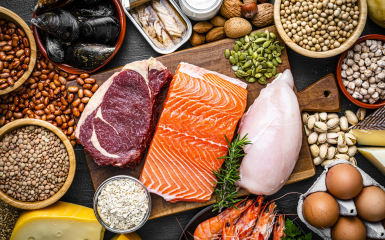
Protein is needed by the body every day: amino acids are used to build muscle proteins, enzymes, hormones, and many other structures. But getting the necessary amount of protein doesn't have to be done with protein bars or large portions of meat.
Points of attention
- The body needs protein every day to build muscle and hormones.
- It is not worth evaluating a product solely based on the amount of protein; it is also important to consider other nutrients.
- Fish, poultry, eggs, tofu, legumes, nuts, and beef are the main sources of protein in the diet.
- Protein dosage depends on several factors, including age, physical activity, and health status.
- Spread your protein intake throughout the day for optimal absorption and stress on the body.
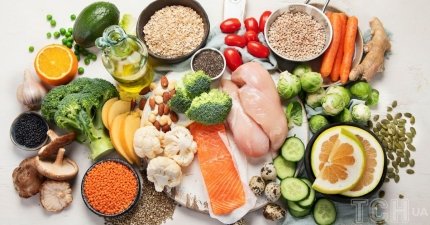
Chicken breast, fish, cottage cheese, Greek yogurt, eggs, lentils, tofu, and even regular beans can provide a significant portion of your daily needs.
At the same time, it is not worth evaluating a product only by the number of "grams of protein per 100 g". What is important is what else is included in its composition: saturated fats, salt, fiber, omega-3, calcium, iron and total calories. That is why salmon and lentils will usually be better everyday sources of protein than sausage, although all three products contain protein. The American Heart Association advises choosing legumes, nuts, fish, low-fat dairy products and lean unprocessed meat more often, and limiting processed meat.
How much protein does a person need per day?
There is no single number for everyone.
The need depends on:
body weight;
age;
physical activity;
the amount of muscle mass;
calorie content of food;
pregnancy;
health status;
recovery from injuries or illnesses.
The World Health Organization states that for most adults, 10–15% of daily energy intake from protein is usually sufficient. For a person of healthy weight who consumes approximately 2,000 kcal per day, this is approximately 50–75 g of protein.
A calculation based on body weight is also often used. A basic guideline for healthy adults is about 0.8 grams of protein per kilogram of body weight.
For example:
60 kg × 0.8 g = approximately 48 g of protein per day.
But this is not a universal optimal number for every situation.
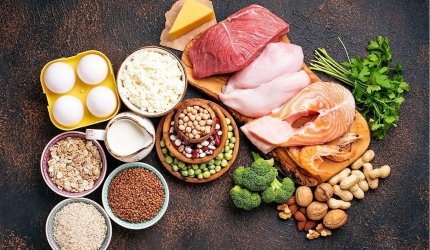
After age 65, more protein may be needed
As we age, our bodies become less responsive to amino acids after eating. This phenomenon is called anabolic resistance.
That's why expert groups on geriatric nutrition often recommend that healthy older adults aim for approximately 1.0–1.2 g of protein per kilogram of body weight per day .
For a person weighing 70 kg, this is approximately 70–84 g of protein.
In some acute and chronic diseases, the need may be even higher, but this requires an individual assessment. This is especially true for people with severe kidney disease, for whom excess protein may be undesirable.
1. Chicken and turkey breast
Lean poultry is one of the most concentrated sources of protein.
100g of cooked chicken breast can have around 30g of protein depending on the cooking method and the specific part of the bird.
The advantage of skinless breast is a relatively small amount of fat with a high concentration of protein.
A practical serving of 120–150 g can provide approximately 35–45 g of protein. For many people, this is already half or even more of their daily requirement.
It is best to bake, stew, boil or grill poultry.
Breading, deep-frying, and fatty sauces can significantly change the calorie content of a dish.
2. Tuna, salmon, sardines and other fish
Fish combines high-quality protein with a number of other nutrients.
Many types of cooked fish contain approximately 20–30 g of protein per 100 g .
Fatty fish is especially interesting:
salmon;
sardines;
herring;
mackerel.
It contains the omega-3 fatty acids EPA and DHA.
Tuna is usually lower in fat and higher in protein, but for variety, it shouldn't be the only fish on the menu.
The American Heart Association recommends regularly including fish and seafood in a healthy diet, especially fatty fish.
What about canned fish?
Canned tuna, sardines, or salmon can be a very convenient protein source.
It is worth checking the label for the amount of salt and taking into account what the product is stored in - water, its own juice, or oil.
Sardines with soft, edible bones provide additional calcium.
3. Greek yogurt and skyr
Thick yogurts, after removing some of the whey, have a higher protein concentration than many regular yogurts.
High-protein natural yogurt often contains around 9–11 g of protein per 100 g . A 200 g serving can provide around 18–22 g.
This makes Greek yogurt or skyr a convenient option for:
breakfast;
snack;
sauce;
dessert;
smoothie bases.
The easiest way is to choose a natural product without a lot of added sugar.
High-protein yogurts can actually contain around 10g of protein per 100g, compared to around 4g in some regular yogurts.
You can add berries, nuts, seeds, or oatmeal to yogurt to add fiber and make the snack more filling.
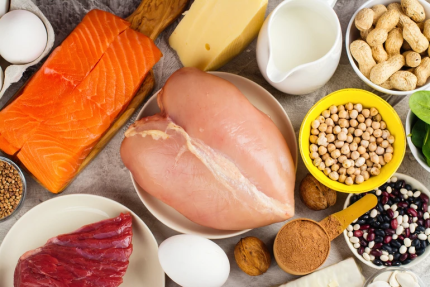
4. Sour milk cheese
Cottage cheese is one of the most convenient foods if you need to increase your protein intake without complicated preparation.
Depending on the fat content and manufacturer, it often contains around 12–18 g of protein per 100 g .
A large 200g serving can provide 25–35g of protein.
Cottage cheese contains a lot of casein, a milk protein that is digested relatively slowly.
This makes it a satisfying option for breakfast, dinner, or a snack.
However, you should pay attention to the fat content, salt content, and additives. A sweet cheesecake dessert with sugar, chocolate, and icing has a completely different nutritional profile.
5. Eggs
One large chicken egg usually contains about 6–7 g of protein .
Two eggs — approximately 12–14 g.
Egg white provides a complete set of essential amino acids, and the yolk contains choline, vitamins, and other nutrients.
Eggs are convenient because they are easy to combine with other products.
For example:
2 eggs + 150g of Greek yogurt for breakfast = approximately 25–30g of protein depending on the products.
Or:
two-egg omelet + cottage cheese + vegetables .
Boiled eggs don't have any unique advantage over an omelet. What matters is how much butter, bacon, fatty cheese, or salt is added to the dish.
6. Lean beef
Lean beef is a concentrated source of complete protein.
100 g of cooked lean beef usually contains about 25–30 g of protein .
It also provides:
heme iron;
vitamin B12;
zinc.
This can be beneficial for people who eat meat, but beef should not necessarily be made the main source of protein every day.
Modern recommendations advise alternating it with fish, legumes, poultry, and other protein foods more often.
It is also worth distinguishing between fresh, unprocessed meat and sausage, salami, hot dogs, and bacon. The same amount of protein does not make these products equally desirable for the daily diet.
7. Tofu
Tofu is one of the best ways to get a significant amount of plant-based protein.
The exact figures vary greatly depending on the density of the product.
100 grams of firm tofu can contain approximately 12–17 grams of protein . Some varieties have a lower concentration.
For comparison, clinical recommendations for plant-based diets give tofu about 16.5 g of protein per 100 g.
Soy contains all essential amino acids, so tofu is a complete plant-based protein product.
It can be:
to fry;
bake;
add to salads;
cook with vegetables;
use in soups;
add to noodles and cereals.
Tofu absorbs the flavor of marinades and spices well, so it is mostly fresh when it is cooked fresh.
8. Tempe
Tempeh is also made from soybeans, but the beans are fermented.
This is one of the most concentrated plant-based protein foods: 100 g can contain approximately 18–20 g of protein .
Unlike soft tofu, tempeh has a dense texture and a pronounced nutty flavor.
It can be sliced, marinated, and baked or fried with vegetables.
For someone looking to cut back on meat, tempeh can be a much better protein substitute than some veggie patties, which are low in actual protein.
9. Lentils
Lentils are inferior to chicken breast in terms of protein per 100 g, but they have another strong point - fiber.
100 g of cooked lentils contain approximately 8–9 g of protein , and a standard large serving can provide around 15–18 g.
Along with protein, a person receives:
dietary fiber;
folates;
potassium;
iron;
complex carbohydrates.
That is why it is wrong to evaluate a protein product only by the number of amino acids.
A serving of lentils may contain less protein than meat, but at the same time significantly increases the amount of fiber in the diet.
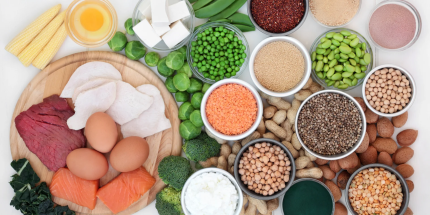
10. Beans, chickpeas and other legumes
Beans, chickpeas, peas, and beans are another inexpensive way to increase your plant-based protein intake.
One cup of cooked legumes, depending on the type, can provide approximately 12–18 g of protein .
The American Heart Association directly recommends using legumes more often as a source of protein and fiber.
Beans are convenient to add to:
soups;
salads;
ragout;
bowls;
vegetable cutlets;
hummus;
to eat.
If bloating occurs after them, it is better to start with small portions and increase them gradually.
Canned beans or chickpeas can be rinsed with water — this helps remove some of the salt.
11. Edamame
Edamame are young soybeans.
They are interesting because they provide both protein and fiber.
A serving of about 120 g can have about 16 g of protein .
Edamame can be added to salad, rice, noodles, or eaten as a separate snack.
This is a good example of how a protein snack doesn't have to be dairy or meat.
12. Pistachios, peanuts and other nuts
Nuts contain quite a lot of protein per 100 g, but a typical serving is much smaller.
For example, about 30 g of pistachios provide about 7–8 g of protein , peanuts about 8 g.
Along with protein, nuts contain unsaturated fats, minerals, and fiber.
But there is a caveat: they are very high in calories.
Therefore, 100 g of pistachios will indeed provide a lot of protein, but such a serving will also contain over 500 kcal.
For an everyday snack, a small handful is more realistic.
Which foods contain the most protein?
If we estimate the approximate concentration in the finished product, the picture looks like this:
| Product | Approximate amount of protein |
| Chicken breast, cooked | about 30 g / 100 g |
| Lean beef | 25–30 g / 100 g |
| Tuna | 25–30 g / 100 g |
| Salmon | 20–25 g / 100 g |
| Tempe | about 20 g / 100 g |
| Sour milk cheese | 12–18 g / 100 g |
| Firm tofu | 12–17 g / 100 g |
| Eggs | 12–13 g / 100 g |
| Greek yogurt/skyr | 9–11 g / 100 g |
| Boiled lentils | 8–9 g / 100 g |
| Pistachios | about 7–8 g / 30 g |
| One large egg | about 6–7 g |
The exact numbers depend on the variety, fat content, brand, amount of water, and cooking method. Therefore, the information on a specific package should always be considered more accurate than a universal table.
Animal or plant protein: which is better?
Animal proteins usually contain all nine essential amino acids in proportions that are convenient for the body.
Such products include:
eggs;
dairy products;
fish;
bird;
meat.
Complete plant sources include, in particular, soy and soy products.
Many other plant proteins are lower in certain essential amino acids, but that doesn't mean a vegetarian needs to mathematically combine the "right" foods on every plate.
If you include various legumes, whole grains, nuts, seeds, and soy products in your diet throughout the day, it is quite possible to get the necessary set of amino acids.
What is more important: the amount of protein or its source?
Both factors.
If there is too little protein, the body will lack building material.
But after reaching the required amount, the so-called protein package is of great importance - what else comes with the protein.
For example:
salmon — protein + omega-3;
lentils — protein + fiber;
Greek yogurt — protein + calcium;
sausage — protein + often high in sodium and saturated fat.
That's why the Harvard TH Chan School of Public Health emphasizes that for long-term health, the source of protein may be more important than simply increasing its total amount.
How to get 80g of protein without protein powder
It's easier than it might seem.
For example:
Breakfast:
undefined 2 eggs + 200 g Greek yogurt — approximately 30 g.
Dinner:
undefined 120 g chicken breast — approximately 35 g.
Dinner:
undefined serving of lentils — approximately 15–18 g.
Total — about 80 g of protein without bars, shakes, and sports supplements.
Another meatless option:
Breakfast: skim milk with nuts — about 25 g.
Lunch: tofu with cereals and vegetables - about 25 g.
Dinner: lentils or beans - about 20 g.
Snack: edamame or yogurt — another 10–15 g.
Do you need to eat all your protein in one meal?
It is much more practical to distribute protein foods throughout the day.
A typical mistake is an almost protein-free breakfast of coffee and a bun, a small lunch, and a huge portion of meat in the evening.
For older adults, expert recommendations often suggest aiming for about 25–30 g of protein at main meals, especially in conjunction with physical activity.
For a healthy young person, there is no need to count every gram so precisely. It is enough for a normal source of protein to be regularly present in breakfast, lunch, and dinner.
Does more protein help you lose weight?
Protein is usually very filling, so getting enough of it can make it easier to control your appetite.
At the same time, the principle "the more protein, the faster weight loss" does not work.
The loss of adipose tissue still depends on the overall energy balance.
For example, nuts are a great protein source, but large servings can easily add hundreds of calories.
Similarly, a “high-protein” chocolate bar can be high in fat and calories.
Therefore, when losing weight, you need to simultaneously consider protein, total calorie content, and diet quality.
Are protein shakes necessary?
For most healthy people, protein powder is not a necessity.
Ordinary food is quite capable of providing the required amount of protein.
But powder can be convenient:
athletes with high protein needs;
people who find it difficult to eat enough;
while traveling;
after training, when normal food is not available;
in certain clinical situations on the recommendation of a specialist.
A typical serving of protein powder provides approximately 15–25 g of protein, depending on the product. However, the powder should not automatically replace whole foods, as regular foods provide a wider range of nutrients.
Who Should Not Increase Protein Abruptly?
For most healthy adults, regular high-protein foods in reasonable amounts are safe.
But switching to a very high-protein diet on your own is not recommended for people with certain kidney diseases or other conditions where a doctor has prescribed protein restriction.
Caution is also needed if a sharp increase in protein means actually replacing vegetables, fruits, grains, and legumes with large portions of meat.
A healthy diet requires protein, fiber, unsaturated fats, and a sufficient amount of plant foods.
Conclusion
The best sources of protein for your daily diet include fish, poultry, eggs, natural dairy products, soy, legumes, nuts, and seeds.
If you need to get more protein, the easiest way is to add it to each main meal: eggs or yogurt for breakfast, fish, poultry, tofu or legumes for lunch, and cottage cheese, lentils or another source for dinner.
There's no need to chase the maximum number on the label. It's important for health to get enough protein from a variety of nutritious foods and maintain a balanced diet.
FAQ
Which foods have the most protein?
Common foods with high protein concentrations include chicken and turkey breast, tuna, lean beef, salmon, cottage cheese, tempeh, and firm tofu.
How much protein do you need per day?
For most adults, a baseline guideline is approximately 0.8 g of protein per kilogram of body weight. The WHO also notes that approximately 10–15% of daily energy from protein is usually sufficient for healthy adults.
How much protein do you need after age 65?
Expert recommendations for healthy older adults are often around 1.0–1.2 g per kilogram of body weight per day due to age-related changes in muscle metabolism.
Which product has the most protein per 100g?
Among common prepared foods, lean poultry, tuna, and some types of meat are among the leaders — approximately 25–30 g of protein per 100 g. The exact values depend on the product and the method of preparation.
Which plant foods have the most protein?
The most concentrated sources include tempeh, firm tofu, soybeans, and edamame. Lentils, beans, chickpeas, nuts, and seeds are also good sources.
How much protein is in one egg?
A large chicken egg typically contains about 6–7 grams of protein. Two eggs provide about 12–14 grams.
Can you get enough protein without meat?
Yes. Soy, tofu, tempeh, legumes, nuts, seeds, and whole grains can be combined throughout the day. Vegetarians can also use eggs and dairy.
Which is better for protein — chicken or cottage cheese?
Chicken breast usually contains more protein per 100g, but cottage cheese is a very convenient source of protein without cooking and provides additional calcium. Both foods can be included in the diet.
Is it necessary to drink protein after a workout?
No. If your daily protein needs are covered through food, a protein shake is not necessary. It is simply a convenient way to quickly get an additional 15–25 g of protein.
Can you eat too much protein?
Yes. More is not always better. People with certain kidney conditions need to be especially careful. For a healthy person, it is more important to meet their needs and choose quality sources rather than maximizing protein intake.
undefined

