
A cup of green, black, or herbal tea is unlikely to add years to your life on its own. However, large observational studies show an interesting pattern: people who drink tea regularly have, on average, a lower risk of premature death and some cardiovascular diseases.
In one of the largest studies involving nearly half a million people, regular black tea consumption was associated with an estimated 9–13% lower risk of death compared with non-drinkers. And a meta-analysis of nearly 2 million participants showed the strongest association with moderate consumption—about 1.5–2 cups of tea per day.
The key word here is association . Such data does not prove that tea prolongs life. People who drink it regularly may have other healthy habits at the same time.
However, tea does contain polyphenols and other biologically active substances, and the unsweetened drink can be a good alternative to sweet sodas, juices, and excessive alcohol. Therefore, it can be considered part of a healthy diet.
Is there a real "longevity tea"?
No, there is no specific variety that has been proven to prolong life.
When researchers study the link between tea and longevity, they most often refer to green or black tea — beverages made from the leaves of the Camellia sinensis plant.
This same group includes:
white tea;
oolong;
puerh;
matcha.
The difference between them lies primarily in the method of growing and processing the leaves.
Chamomile, mint, ginger, rooibos, and hibiscus are also commonly called tea, but botanically they are herbal or plant infusions.
Their properties need to be evaluated separately.
Why is tea associated with longevity in general?
Tea leaves contain polyphenols, a large group of plant compounds.
Green tea is particularly rich in catechins, among which epigallocatechin-3-gallate, or EGCG, is often studied.
During the production of black tea, some of the catechins are converted into theaflavins and other polyphenolic compounds.
They are studied in the context of:
condition of blood vessels;
blood pressure;
blood lipid levels;
oxidative stress;
inflammatory processes;
metabolic health.
This doesn't mean that tea works like a medicine. The effects of a regular cup are usually mild, and long-term health depends on your entire lifestyle.
1. Green tea is the most researched
If you were looking for a drink that is most often called “longevity tea,” green tea would be one of the top candidates.
It contains catechins and caffeine, and its regular use has been studied for many years in East Asian countries.
Large observational studies in Japan have linked regular green tea consumption to reduced cardiovascular mortality. Similar associations have not been found in all populations, so it is not appropriate to extrapolate specific percentages to each individual.
Clinical studies also show that components of green tea may produce small reductions in total and LDL cholesterol.
However, there is no evidence that green tea on its own prevents heart attacks, cancer, or dementia.
What about the match?
Matcha is made from crushed green tea leaves. The person actually consumes the leaves themselves, so the concentration of caffeine and some polyphenols can be higher than in a regular infusion.
Matcha can be a normal part of the diet, but the principle of “the more, the better” does not work here.
In particular, one should not equate a cup of green tea with concentrated extracts in capsules. Rare cases of liver damage have been described for high doses of green tea extract, while regular tea as a beverage is considered safe for most adults.
2. Black tea is a good option for every day
Black tea is often underestimated due to the popularity of green tea, although there is very extensive data for it.
In a large British study, almost 500,000 people aged 40 to 69 were followed for approximately 11–14 years.
Those who regularly drank at least two cups of tea a day had a risk of death that was about 9–13% lower than people who drank almost no tea.
The association remained significant regardless of whether milk or sugar was added to the tea, as well as genetic characteristics of caffeine metabolism.
However, this is an observational study. It shows a statistical association, not proof that two cups of tea will automatically extend your life by a certain number of years.
The practical conclusion is simple: unsweetened black tea can very well be a regular drink in a healthy diet.
3. Oolong is a cross between green and black tea.
Oolong is made from the same tea plant, but the degree of oxidation of the leaves is between green and black tea.
Therefore, its polyphenol composition is also intermediate.
Oolong contains:
catechins;
theaflavins;
caffeine;
other polyphenolic compounds.
Some observational studies have linked green and oolong teas to lower rates of certain diseases, but the evidence is much weaker than for green and black teas.
Be especially wary of high-sounding claims like “oolong tea reduces cancer risk by 70%.” Such figures may come from individual observational studies and do not imply a proven preventive effect.
The main reason to drink oolong tea is because it tastes good and can replace sweet drinks.

4. White tea is healthy, but not “stronger” than green tea
White tea is made from young leaves and buds with minimal processing.
It contains catechins, flavonoids, and other polyphenols.
It is sometimes claimed that white tea has the highest concentration of antioxidants of all varieties. In fact, the composition depends greatly on the variety, where it is grown, how it is processed, the temperature of the water, and the duration of brewing.
Therefore, there is no universal rule that "white tea is healthier than green tea."
Furthermore, a higher amount of a particular plant compound in a cup does not necessarily mean a proportionally greater health benefit.
White tea can be alternated with green, black, and oolong for variety.
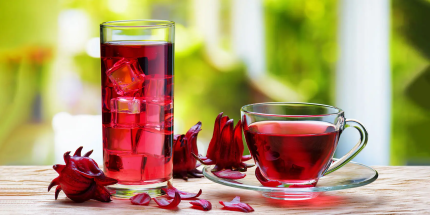
5. Hibiscus is an interesting option for blood pressure control
Hibiscus tea is made from the sepals of Hibiscus sabdariffa. It contains no natural caffeine and has a characteristic sour taste.
Unlike many other herbal teas, hibiscus has a fairly good base of randomized studies on blood pressure.
Meta-analyses show that regular consumption of hibiscus can modestly reduce systolic and diastolic blood pressure, especially in people with pre-existing high blood pressure.
This does not mean that hibiscus can be used instead of antihypertensive medications.
People with low blood pressure or those who are already taking medications for hypertension should not experiment with large amounts of concentrated infusion for medicinal purposes without consulting a specialist.
6. Rooibos — caffeine-free and with polyphenols
Rooibos is made from the South African plant Aspalathus linearis.
It is naturally caffeine-free, so it can be a convenient evening drink for people who find green or black tea disrupts their sleep.
Rooibos contains various polyphenolic compounds. Small human studies have shown potential changes in certain lipid profiles and oxidative stress.
But the evidence base is still much smaller than for classic tea.
Therefore, it is too early to call rooibos a drink that has been proven to protect the heart or prolong life.
Its strengths are simpler:
lack of caffeine;
pleasant taste;
the opportunity to drink in the evening;
alternative to sugary drinks.
7. Ginger tea
Ginger infusion is often drunk for nausea or discomfort in the digestive system.
Ginger itself is being researched quite extensively, with evidence suggesting its potential benefits for some types of nausea, particularly during pregnancy, and the potential effects of ginger supplements on certain metabolic markers.
However, there is a fundamental difference here.
Most clinical studies have been conducted with controlled doses of ginger powder or extract. A typical cup of water with two slices of root contains a very different amount of active ingredients.
Therefore, ginger tea can be considered a pleasant drink, but it is wrong to attribute to it all the effects of concentrated supplements.
Excessive amounts of ginger can cause heartburn or abdominal discomfort in sensitive people.
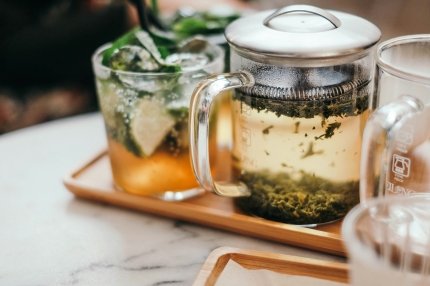
8. Chamomile tea
Chamomile contains virtually no caffeine and is traditionally used as an evening drink.
It is often called the “tea of longevity” because of an interesting observational study of people over 65 of Mexican descent.
Among women, chamomile consumption was associated with about a third lower risk of death during the follow-up period. This statistically significant association was not found in men.
This result is interesting, but it cannot be interpreted as proof that the daisy continues to live.
People who regularly consume certain herbal beverages may differ in their diet, social habits, lifestyle, and many other characteristics.
Therefore, the main benefit of chamomile tea for most people is that it is a caffeine-free evening drink.
9. Mint tea
Peppermint tea is also usually caffeine-free.
Small studies have examined its possible effects on attention, memory, and subjective well-being, but the evidence is not sufficient to call it a drink for the prevention of cognitive aging.
For many people, the main benefit of mint infusion is more practical: it can replace evening coffee or a sweet drink.
However, mint is not for everyone. In some people with gastroesophageal reflux, mint products can worsen heartburn.
If you regularly experience a sour taste or a burning sensation behind your breastbone after drinking this tea, it is better to choose another option.
What about turmeric?
Turmeric tea is often touted as one of the most powerful “anti-aging teas.”
Curcumin is one of the main compounds in turmeric that has been studied in laboratory experiments and clinical trials of concentrated preparations to examine its effects on inflammation and various health indicators.
But the absorption of curcumin from food is quite low.
A cup of warm drink with a small amount of spice is not equivalent to the standardized extract used in studies.
Therefore, "turmeric tea for longevity" is better perceived as a culinary drink, not a medicinal remedy.
What tea is best to drink every day?
If a person tolerates caffeine well, the easiest options are green or black tea.
It is for them that the most data on long-term health has been accumulated.
Oolong and white tea can be used for variety.
If caffeine prevents you from sleeping, the following are suitable in the evening:
rooibos;
chamomile;
hibiscus;
mint;
ginger infusion.
The main thing is not to turn a healthy habit into a way to get excess sugar.
Tea with five spoons of sugar, syrup, or a lot of honey has a completely different nutritional profile than an unsweetened beverage.
How much tea do you need to drink to benefit?
There is no exact "longevity dose."
In a meta-analysis of nearly two million people, the lowest risk of all-cause mortality was observed at approximately 1.5–2 cups per day , and further increases in quantity did not provide proportionally greater benefit.
In other large studies, positive associations were also observed with two to three cups.
This data does not mean that you should definitely start drinking tea or increase its quantity.
For most healthy people , 2–3 cups of unsweetened tea throughout the day is a fairly moderate guideline, as long as the drink is well tolerated.
How much caffeine is in tea?
The amount depends on the variety, serving size, water temperature, and brewing time.
Typically, a cup of tea contains less caffeine than a cup of coffee of the same volume, but the difference between products can be significant.
Caffeine contains:
black tea;
green tea;
white tea;
oolong;
matcha.
For most healthy adults, total intake of up to about 400 mg of caffeine per day is not usually associated with negative effects.
However, individual tolerance may be significantly lower.
Signs of excess caffeine:
palpitation;
trembling;
anxiety;
sleep problems;
headache;
nervousness.
If tea after 4–5 p.m. prevents you from falling asleep, the benefits of its polyphenols are hardly worth achieving at the cost of chronic sleep deprivation.
You need less caffeine during pregnancy
During pregnancy, it is generally recommended to limit total caffeine intake to about 200 mg per day .
It is important to consider all sources:
tea;
coffee;
matcha;
chocolate;
cola;
energy drinks.
Herbal tea does not automatically mean "you can drink it without restrictions": for many plants, the safety of large quantities during pregnancy has not been sufficiently studied.
Why it's better not to drink tea too hot
In discussions about the benefits of tea, temperature is often forgotten.
Regular consumption of very hot beverages, above approximately 65 °C, has been associated with an increased risk of esophageal cancer.
The problem is with the temperature, not the specific type of tea.
Therefore, there is no need to drink the drink immediately after brewing. It is better to let it cool down a bit.
If the tea burns your tongue and you have to drink it in small sips due to excessive heat, you should just wait.

Tea may affect iron absorption
Black and green tea polyphenols can reduce the absorption of non-heme iron, the form found mainly in plant foods and iron supplements.
For a healthy person with normal iron stores, this is usually not a significant problem.
Another situation is when:
iron deficiency;
anemia;
very low ferritin;
a predominantly plant-based diet;
taking iron supplements.
In such cases, it is better not to drink strong tea with food or iron tablets.
A simple strategy is to separate food or iron supplements and tea by at least an hour or so.
Is tea with honey healthier?
Honey adds flavor, but does not turn tea into a medicinal drink.
The main component of honey is sugars.
A teaspoon every now and then may be fine as part of a healthy diet. However, several large spoonfuls in each cup quickly adds up to your daily intake of free sugars.
Especially if a person drinks four to five cups a day.
Therefore, for regular consumption, the best option is tea without sugar or with a minimal amount of sweetener.
What is more important than choosing a specific tea?
The biggest mistake is trying to compensate for a generally unhealthy lifestyle with a drink.
Even the most expensive green tea does not neutralize:
smoking;
constant lack of sleep;
excessive alcohol consumption;
inactivity;
uncontrolled high blood pressure;
lack of vegetables and fiber;
excess of ultra-processed food.
Tea can be a small part of a healthy lifestyle.
For longevity, quitting smoking, physical activity, normal blood pressure, adequate sleep, a balanced diet, and timely medical care remain much more important.
Conclusion
When it comes to teas with the best evidence base, green and black tea remain the leaders. Large observational studies link their regular, moderate consumption to lower overall and cardiovascular mortality.
Hibiscus has interesting clinical data on blood pressure, and rooibos, chamomile, mint, and ginger can diversify the menu without additional caffeine.
However, "longevity tea" is a nice simplification. No single type of tea can guarantee a long life. The best tea is one that you tolerate well, drink not too hot, don't overload with sugar, and use as part of an overall healthy diet.

FAQ
What tea is considered the tea of longevity?
There is no official “longevity tea.” The most evidence for long-term health benefits has been accumulated for green and black tea.
Which tea is the healthiest?
There is no one absolute leader. Green tea is rich in catechins, black tea is rich in theaflavins and other polyphenols. Both can be part of a healthy diet.
Does tea really prolong life?
Observational studies have linked regular, moderate tea consumption to a lower risk of premature death. However, they do not prove that tea is the cause.
How many cups of tea can you drink per day?
For most healthy adults, 2–3 cups per day is a moderate amount, taking into account total caffeine intake from coffee, cola, chocolate, and other sources.
Which is healthier - green or black tea?
Both have their strengths. Green tea contains more of certain catechins, black tea contains more theaflavins. Large studies have found positive associations for both types, so the choice can be made based on taste and tolerance.
Can you drink green tea every day?
For most healthy adults, regular green tea is safe to drink in moderation. People who are sensitive to caffeine should avoid drinking it late at night.
What tea is best to drink with high blood pressure?
Hibiscus has been studied in randomized clinical trials, where regular use was associated with modest reductions in blood pressure. It is not a substitute for prescribed medications.
What tea is best to drink in the evening?
Convenient caffeine-free options include rooibos, chamomile, peppermint, or some fruit and herbal teas. Peppermint may aggravate reflux symptoms in sensitive people.
Can I drink tea immediately after a meal?
A healthy person can. If you have an iron deficiency or are taking iron supplements, it is better to separate black and green tea from food or pills by about an hour.
What temperature should tea be?
It's best not to drink it scalding hot. Regular consumption of beverages above about 65°C has been linked to an increased risk of esophageal cancer, so it's a good idea to let the tea cool after brewing.

