
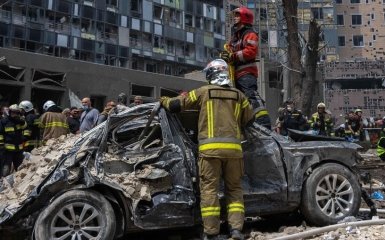
Military CASCO is insurance protection for a car against damage or destruction due to military risks: missile strikes, drone attacks, falling debris, blast wave, fire after arrival, air defense effects, or destruction of nearby structures. For Ukrainian drivers, such insurance has become a practical response to the reality in which a car can be damaged not in a road accident, but in a parking lot near a house, office, shopping mall, or while parked in the open air.
Points of attention
- Military CASCO is not a separate state type of insurance, but a market name for products that cover contractually defined losses from military events.
- Demand has increased due to the obvious risk to cars in large cities and towns, which are regularly attacked.
- The most common mistake a driver makes is thinking that any policy with war risk automatically replaces full CASCO.
A regular civilian car insurance policy does not repair your own car after shelling. It is designed to compensate for damage to victims of accidents, and the MTIBU directly explains: a civilian car insurance policy is not intended to repair your own car after an accident that is your fault. To protect your own car, you need comprehensive insurance, a separate military risk policy, or full comprehensive insurance with added military coverage.
As of September 10, 2026, Ukrainian insurers offer various formats of such protection: a separate short-term policy for 3–6–12 months, an additional option to full CASCO or a special program only for war risks. The conditions differ significantly: the tariff may depend on the cost of the car, age, territory of operation, deductible, compensation limit, current CASCO and the list of covered events.
What is military CASCO in simple words?
Military CASCO is not a separate state type of insurance, but a market name for products that cover contractually defined losses from military events. Different companies may have different names: “military risks”, “protection against military risks”, “CASCO against arrivals”, “Iron Dome”, “Patronus” or other commercial names.
Legally, it is not the name that is decisive, but the contract. The Law of Ukraine “On Insurance” defines an insured event as an event provided for by an insurance contract or legislation, the risk of which is insured, and upon the occurrence of which the insurer is obliged to make an insurance payment. Therefore, the question “is shelling covered” should be checked not in an advertising banner, but in the terms of a specific contract.
In a practical sense, military CASCO answers three questions:
what exactly happened to the car;
whether this event is covered;
how the insurer will calculate the payout.
For example, one program may cover direct missile or drone hits, falling debris, and blast waves. Another may have limitations on fire, destruction of building structures, territory, age of the car, deductible, or total loss of the vehicle.

Why has the demand for military CASCO increased?
Demand has increased due to the obvious risk for cars in large cities and populated areas, which are regularly attacked. A car can be parked next to a house and be damaged by glass, fragments of the facade, parts of a drone, a blast wave, a fire in a nearby car, or a collapse of a structure.
According to Delo.ua, which surveyed insurance companies, in the first half of 2026, demand for car insurance against war risks increased significantly: “INGO” received UAH 71.8 million in payments under such programs in January-June, ARX paid UAH 21 million for more than a hundred damaged cars in the first five months, and “Arsenal Insurance” reported more than 200 settled cases since the beginning of the full-scale invasion for more than UAH 46 million.
The reason is not limited to the number of contracts. Repairing a modern car has become significantly more expensive: headlights, a panoramic roof, cameras, radars, sensors, electronic units, decorative elements and bodywork can cost tens or hundreds of thousands of hryvnias. Even if the car is not destroyed, seemingly small fragments can damage the glass, optics, roof, hood, paintwork, wiring or interior.
What can missile and drone insurance cover?
Typical military CASCO coverage may include damage or total loss of a vehicle due to direct or indirect action of missiles, drones, barrage munitions, debris, air or missile defense systems, blast wave, or related consequences. However, the specific list depends on the contract.
PZU describes protection against war risks as covering the consequences associated with a war situation, while CASCO covers standard risks such as road accidents, theft, and natural disasters; for cars in wartime, the company indicates a compensation limit of up to UAH 5 million per vehicle.
ARX in the Iron Dome product defines war risks as loss or damage to a vehicle solely as a result of direct or indirect impact of missiles, drones, their fragments, air defense and missile defense systems; for a separate product, a deductible of 10% of the insured amount is indicated, and if there is a certain valid ARX CASCO on the date of the event, the deductible may not apply.
“Arsenal Insurance” in the “Patronus” product describes coverage for damage or destruction of a car due to the direct or indirect action of missiles, drones, loitering munitions, air defense/missile defense systems and their fragments, if the insurance territory is not included in the territories where hostilities are taking place or other contract exclusions apply.
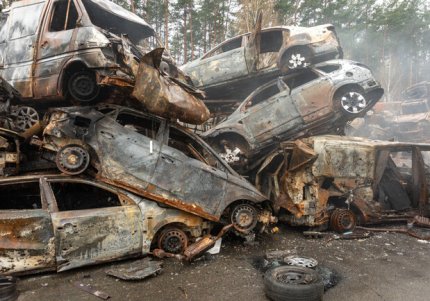
What military CASCO usually does not cover
The most common mistake drivers make is to think that any policy with war risk automatically replaces full CASCO. This is not true. A separate, cheaper product may cover only war events and not work in the event of a regular accident, theft, a tree falling during a storm, hitting a pothole, damage in a parking lot, or illegal actions by third parties.
“Arsenal Insurance” directly distinguishes products in the FAQ: CASCO ALL RISKS and CASCO 50/50 cover theft, accidents, natural disasters, fire, falling objects and other events, while CASCO “Patronus” covers exclusively military risks. INGO also advises to conclude a CASCO contract for maximum protection against accidents, natural disasters, fire, robbery, theft and other risks, while “Alarm Response” is focused on the consequences of military actions.
Typical exceptions to look for in a contract:
areas of active hostilities;
temporarily occupied territories;
individual border or frontline settlements;
cars with temporary registration or transit numbers;
using the car as a taxi or for paid transportation, unless this has been agreed upon;
damage before the contract begins;
events without proper recording;
violation of the insurer's notification deadlines;
repairs before inspection without approval;
lack of supporting documents;
certain types of special transport or commercial use.
Each of these points can be decisive. A policy at an attractive price may turn out to be weak if the parking area is excluded from coverage or the limit is lower than the actual value of the car.
How much does military CASCO cost?
The market often offers rates in the range of approximately 0.8–2% of the cost of the car per year, but this is a guideline, not a guaranteed price. According to Delo.ua, ARX offered an annual price for the “Iron Dome” in the range of 0.8–2% of the cost of the car with the possibility of registration for 3, 6 or 12 months, “INGO” for the added military risk to the usual CASCO indicated a start from 1.08%, and for a separate policy — from 1.5%. “Arsenal Insurance” in the FAQ indicates an annual rate for “Patronus” of 1.99% of the insured amount, 0.99% for 3 months and 1.49% for 6 months.
Approximate calculation:
a car for 500,000 UAH at a rate of 1% — about 5,000 UAH per year;
a car for 1,000,000 UAH at a rate of 0.8–2% — about 8,000–20,000 UAH;
a car for 2,000,000 UAH at a rate of 0.8–2% — about 16,000–40,000 UAH;
a car for 4,000,000 UAH at a rate of 1.5% - about 60,000 UAH.
But the actual price may vary due to the age of the car, brand, market value, place of operation, contract term, deductible, availability of regular CASCO, number of previous insurance cases, documents, inspection method, and individual rules of the insurer.
What is a franchise and why is it important?
A deductible is a portion of the damage that the car owner pays for themselves. It can be a fixed amount or a percentage. In military CASCO, the deductible often significantly affects the actual benefit of the policy.
For example, if the insured amount is UAH 1,000,000 and the unconditional deductible is 10% of the insured amount, the owner actually bears UAH 100,000. If the debris damaged the glass and headlight by UAH 80,000, the payment may not make sense or be zero depending on the conditions. If the damage is UAH 400,000, the insurance company may compensate the amount after deducting the deductible.
ARX for a separate “Iron Dome” indicates an unconditional deductible of 10% of the insured amount, at the same time, if there are separate valid ARX CASCO contracts on the date of the event, the deductible for this risk may not apply. In “Patronus”, according to public materials, the deductible may vary depending on the repair or complete destruction of the car, so it must be checked in the current version of the contract.
A low rate is not always beneficial if the deductible is high. The driver should compare not “how much does the policy cost”, but “how much will I actually receive after damage”.
Payout limit: the main risk for an expensive car
The sum insured and the liability limit are the maximum limits up to which the insurer is liable under the contract. If the car costs UAH 3 million and the compensation limit is UAH 1.5 million, the complete destruction of the car does not mean the return of its market value.
INGO for the “Alarm Response” product indicates that the insured amount is set at the cost of the vehicle, but not more than 3 million UAH, unless otherwise specified in the contract; it also lists restrictions on the type of registration and individual documents that may be required to confirm the insured event. PZU in its materials on war risks indicates a maximum liability limit of up to 5 million UAH per vehicle.
For an inexpensive car, the limit may be sufficient. For a new premium crossover, an electric car, a company car with additional equipment, or a car with expensive driver assistance systems, the limit must be calculated separately. It is especially important to check whether the insurance amount includes additional equipment: charging cables, a luggage system, special equipment, expensive wheels, tuning, or electronics installed after purchase.
Territory of validity: where the policy may not work
Military CASCO almost always has territorial restrictions. The insurer may exclude temporarily occupied territories, areas of active hostilities, communities from the official list of combat zones, individual regions or settlements near the front or border.
PZU in its corporate description of war risks notes that coverage is valid provided that on the date of the event the territory has not left the control of the Ukrainian authorities and is not located in a zone of military or combat operations, ATO/JFO territories, as well as among the listed regions and territories in accordance with the product conditions. ARX in its information document also links the coverage to territorial communities that are not included in the territories of combat operations, possible combat operations or temporarily occupied territories in accordance with the documents of the competent authorities.
Before purchasing a policy, you need to check the address where the car is actually parked most of the time. If the car is constantly in an area that the insurer excludes, the policy may not provide the expected protection.
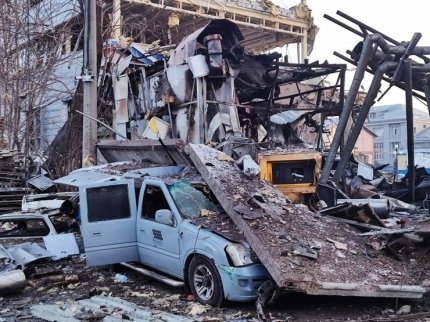
Separate military CASCO or full CASCO with military risk
There are two main approaches.
The first is a separate policy only for military risks. It is cheaper, simpler, and suitable for a driver who wants to protect himself specifically from missiles, drones, debris, blast waves, and similar events. But ordinary accidents, theft, natural disasters, or damage in the parking lot may remain outside the coverage.
The second is full CASCO with added war risk. It costs more, but covers a wider range of events. INGO notes on the CASCO page that full CASCO can cover various risks, and “Alarm Reset” is a separate program for losses from war risks; the company describes the average market rate for full CASCO in the range of 2.5–6% of the car’s cost per year.
A separate policy may be logical for a car that is parked outdoors in a big city, but the owner is willing to bear the risk of a regular accident on his own. Full CASCO with military extension is better suited for a new, loan, leasing, corporate or expensive car, where any major damage is critical for the budget.
Who needs military helmets the most?
This policy makes the most sense for car owners who have a high parking risk and expensive repairs. These are residents of large cities, drivers without underground parking, owners of new and expensive cars, electric cars, crossovers with a panoramic roof, cars with matrix optics, cameras, radars, expensive body parts and complex electronics.
The policy is worth considering if:
the car is often parked in the courtyard of a high-rise building;
nearby there are glass facades, business centers, shopping malls or dense parking;
the car is needed for work every day;
car purchased on credit or lease;
repairing even minor damage will be expensive;
there is no underground parking;
the owner is not ready to cover the risk of total loss on his own;
The car has a high market value.
For an old car with a low market value, the decision is not so obvious. If the deductible is high and the limit of the probable payout is close to the cost of the policy in a few years, the economic sense may be weak. In this case, it is better to do an honest calculation: how much does the car cost, how much does the policy cost, what is the deductible, what is the probable payout, and whether there is a cheaper way to reduce the risk, such as paid underground parking.
How to compare policies: don't just look at the percentage
A rate of 0.8%, 1.5%, or 1.99% doesn't mean much by itself. Two policies for the same price may have different limits, deductibles, coverage areas, exclusions, inspection rules, repair procedures, and payment terms.
Before paying, compare:
what exactly is considered a military risk;
is the blast wave covered;
Are the air defense/missile fragments covered?
Is fire covered after arrival?
is the fall of glass, facade, tree or structures after an explosion covered;
is there coverage for total loss;
what is the deductible for repairs;
what is the deductible in case of total loss;
what is the payout limit;
Does the insurance amount decrease after the first payment?
whether the insurance amount is restored;
which territories are excluded;
what documents are needed after the event;
Is it possible to repair a car at the selected service station?
Is the wear of parts taken into account?
is the tow truck covered;
Do I need to wait for the insurer's inspection before repairs?
Check separately how the insurer determines the constructive destruction of the car. The contract may stipulate that the car is considered economically unviable for repair if the cost of restoration exceeds a certain percentage of its insured value. After that, the deductible and the value of the usable remains may be deducted from the payment.
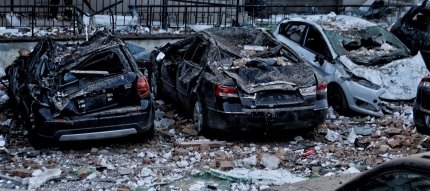
What documents will be needed after the shelling?
The package of documents depends on the contract, but usually the insurer asks to confirm the event itself, the right to the car, the circumstances of the damage and the amount of the loss. INGO notes on the product page that the main document proving an insured event with military risks is an extract from the ERDR, and a certificate from a medical institution regarding the driver's condition may also be required in certain cases, for example, in a collision with military equipment.
In practice, the driver should be prepared for the following documents:
passport or other document of the owner;
RNOKPPP;
car registration certificate;
insurance contract or policy number;
photos and videos of damage;
information about the place and time of the event;
a statement to the police;
notification coupon;
extract from the ERDR or other document provided by the insurer;
inspection report or expert opinion;
service station bill or repair estimate;
documents for the tow truck, if it is covered.
The Ministry of Internal Affairs explains in the material on recording damaged property after shelling that the investigative and operational group inspects the damaged property, draws up an inspection report, after the application, the police provide a notification coupon, and after entering information into the ERDR, at the request of the applicant or victim, they can provide an extract from the ERDR.
What to do if your car is damaged by a missile or drone
The first step is safety. Do not approach a car if there is debris, smoke, fire, broken wires, the smell of fuel, damaged gas pipes, unstable structures, or emergency services are nearby. The Cabinet of Ministers of Ukraine advises that if you discover debris from missiles or drones, do not take photos or publish such images, but immediately call 101 or 102 and wait for the State Emergency Service or the police.
When the area is safe and services allow access, do the following:
Record a general plan of the scene.
Take photos of the car from different angles.
Separately take photos of license plates, VIN, mileage, damage to glass, body, interior, headlights, and wheels.
Do not touch debris or suspicious objects.
Notify the police and the insurance company.
Check with your insurer which documents are required under your contract.
Do not start repairs before the inspection, unless the contract allows it.
Save receipts for the tow truck, parking, and emergency work.
Get written instructions from the insurer.
After inspection, agree on the service station or payment procedure.
If the car cannot be restored, it must still be deregistered. The Main Service Center of the Ministry of Internal Affairs reminds that cars destroyed or damaged as a result of shelling can be scrapped, and for this you need to contact the pre-trial investigation bodies and obtain a document confirming the status of the injured person; in appropriate cases, mobile service centers of the Ministry of Internal Affairs provide such services free of charge.
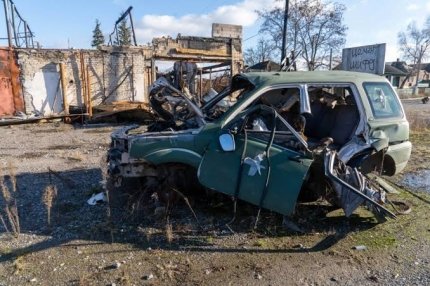
Can I repair my car before the insurer inspects it?
The general rule is not to rush into repairs until the insurer has inspected or given written approval. If you alter the condition of the car, remove debris, replace glass, restore the body, or disassemble the interior before fixing, the insurer may question the extent of the damage.
MTIBU explains similar insurance logic in the context of a road accident: damaged property must be kept in the condition it was in after the event, until inspected by an accident commissioner or expert, and the possibility of such an inspection must be ensured. For military CASCO, the contract determines specific terms and rules, but the principle is the same: first fixation, then repair.
The exception is actions to eliminate danger. If you need to put out a fire, stop a fuel leak, evacuate a car from a dangerous area, or close the interior from rain after a broken window, this may be necessary. But before such actions, it is worth recording the condition of the car as much as possible with photos and videos and notifying the insurer.
How does parking affect
Parking is not a substitute for insurance, but it can reduce the likelihood of damage. Underground or surface parking often provides better protection against glass, light debris, falling facade elements, branches, and some of the effects of a blast wave. Open parking near glass facades, old balconies, advertising structures, trees, or tightly parked cars is at higher risk.
But the insurer looks not only at the fact of damage, but also at the terms of the contract. Some products may contain requirements regarding the territory of operation, storage location, notification of changes in conditions or commercial use. “Arsenal Insurance” in the materials of “Patronus” among the circumstances that significantly affect the risk assessment, names a change in storage conditions, regime or territory of operation, transfer of the car for rent, use for taxis and other changes.
Therefore, if the car has started to be permanently parked in another city, is used as a taxi, is leased, or has changed operating conditions, this should be checked against the contract and, if necessary, notify the insurer.
Does it make sense to insure an old car?
For an old car, the decision depends on arithmetic. If the car costs UAH 250,000, the policy costs UAH 5,000 per year, and the deductible is 10% of the insured amount, the owner effectively assumes UAH 25,000 of the first loss. If the probable repair after the wreck will cost UAH 20,000–30,000, the benefit of the policy may be limited. If the car can be completely lost, and it is critically needed for work, insurance may make sense even for a car that is not new.
For an expensive car, the logic is different. One matrix headlight, panoramic roof, adaptive cruise radar, camera, control unit, or body panel can cost more than an annual policy. Therefore, military CASCO often looks the most rational for newer, credit, corporate, and premium cars.
The right question is: is the owner willing to pay for a total loss or major repairs themselves? If not, insurance can be part of the financial protection.
How to check an insurer before buying
Military CASCO is a financial product, so not only the price is important, but also the reliability of the company, the settlement procedure, real payments, clear documents, and accessibility of communication.
Check:
does the company have a license;
whether it publishes information about the insurance product;
whether the terms of the contract are valid;
Are the exceptions described clear?
Are there any examples of payments?
how quickly applications are accepted;
whether online settlement is available;
are there partner service stations;
Is it possible to receive written advice before payment?
whether the contract contains excessively broad grounds for refusal.
In an insurance contract, the insured also has obligations. The Insurance Law stipulates that when concluding a contract for property risks, the insured must notify the insurer of the insured interest in the property, as well as provide truthful information within the terms of the contract. If important circumstances are hidden - for example, commercial use of the car or another region of constant operation - this can create problems during payment.
Step-by-step guide to choosing a military helmet
Estimate the market value of the car.
Determine where the car spends the night and where it is most often located.
Check if this area is excluded from coverage.
Decide whether you need a separate military policy or full comprehensive insurance.
Compare at least 3 offers.
Check the list of covered events.
See the franchise separately for repairs and total destruction.
Check the maximum payout limit.
Check whether the insurance amount decreases after the first payment.
Read the exception.
Find out what documents are needed after the shelling.
Check the car inspection rules before signing a contract.
Find out how repairs are approved.
Ask for a final offer in writing.
Save the contract, attachments, insurer contacts, and instructions in case of an insured event.
If an insurance agent explains everything verbally but cannot show the relevant clause of the contract, this is a weak basis for a decision. In insurance, payment is not made according to the logic of “I was told so”, but according to the terms of the document.
Typical driver mistakes
The first mistake is to buy the cheapest policy without analyzing the deductible. A high deductible can “eat up” most of the payout for average damage.
The second mistake is not checking the coverage area. If the car is parked in a region or community that is excluded from coverage, the policy may not work.
The third mistake is to confuse civil liability insurance, comprehensive insurance, and military comprehensive insurance. Civil liability insurance works to cover liability to other participants in an accident, not to repair your car after shelling.
The fourth mistake is to think that a separate military policy covers all risks. If you need protection against accidents, kidnapping, natural disasters, and military events, you should consider a broader CASCO with appropriate options.
The fifth mistake is to start repairs before the inspection. This can make it difficult to settle.
The sixth mistake is not to record the event through the police. For war risks, the insurer often requests official documents, in particular an extract from the ERDR or other confirmation provided for in the contract.
The seventh mistake is not taking into account the usable remains in the event of a total loss. If the car is destroyed, but some of the parts have value, the contract may provide for a special calculation procedure.
Conclusion
Military CASCO can be a useful financial protection for car owners in Ukraine, especially if the car is expensive, new, on credit, needed for work, or permanently parked in the open air in a large city. Such a policy may cover damage from missiles, drones, debris, blast waves, air defense/missile defense systems, and related consequences, but the exact list depends on the contract.
The cost is often calculated as a percentage of the insured amount, and the market offers guidelines of approximately 0.8% to 2% of the car's value per year. But the rate should not be the main criterion. The decisive things are the deductible, payment limit, territory, covered events, exclusions, the procedure for documentary confirmation and repair rules.
The best solution is to compare several offers, read the terms and conditions before payment, and calculate the actual payment in typical scenarios: broken glass, damaged optics, body repair, fire nearby, or complete destruction of the car. Military CASCO does not eliminate the risk of a crash, but it can reduce the financial blow after the event.
FAQ
What is military CASCO?
Military CASCO is car insurance against contractually defined military risks: missiles, drones, debris, blast wave, air defense/missile defense systems, fire, or complete destruction of the car. The specific list of events depends on the insurer's terms.
How much does car insurance against missiles and drones cost?
Approximately, the market has rates of about 0.8–2% of the car's cost per year. For example, Delo.ua provided data on ARX with a range of 0.8–2%, INGO with a starting price of 1.08% as an additional risk to CASCO and 1.5% for a separate policy, and Arsenal Insurance in its FAQ states a rate of 1.99% per year for Patronus.
Does civil liability insurance cover car damage from shelling?
No. The civil auto insurance is intended to compensate for damage to victims of a road accident within the limits of the driver's liability. MTIBU explains that the civil auto insurance is not intended to repair your own car after an accident due to your fault. For your own car, you need a CASCO or a separate war risks policy.
Does military CASCO cover blast waves?
May cover if specifically stated in the contract. Some products describe direct and indirect effects of missiles, drones, debris, air defense/missile defense and related consequences. Before paying, you should check whether blast wave, fire, building debris and structural collapse are specifically included.
Does military CASCO apply in front-line areas?
Not always. Many programs have territorial restrictions: occupied territories, zones of active hostilities, communities from official lists or individual regions may be excluded. PZU and ARX in public terms directly tie coverage to territorial restrictions and the status of communities on the date of the event.
What is a deductible in military CASCO?
The deductible is the part of the damage that the car owner pays himself. If the deductible is 10% of the insured amount for a car worth UAH 1 million, the owner may bear UAH 100,000 of damage himself. Therefore, it is necessary to calculate not only the policy rate, but the real amount of possible payment after the deductible.
What documents are needed for payment after shelling?
Typically, the owner's documents, car registration certificate, policy, photos and videos of damage, a police report, a notification ticket, an extract from the ERDR or another document provided for by the contract, as well as an inspection and repair estimate are required. INGO lists an extract from the ERDR among the evidence of an insured event with war risks.
Is it possible to repair a car immediately after being shot?
It is best not to start repairs until the insurer has inspected the vehicle or has given written approval, unless the contract allows otherwise. First, you need to record the damage, notify the police and insurance company, get instructions, and keep evidence. Emergency actions for safety are possible, but it is advisable to record them with photos and videos.
What to do if the car is completely destroyed?
You need to contact the police or another pre-trial investigation body, obtain a document on the status of the injured person, notify the insurer and comply with the terms of the contract. The Main Service Center of the Ministry of Internal Affairs explains that destroyed or unrepairable cars must be scrapped, and mobile service centers of the Ministry of Internal Affairs can provide such services free of charge in appropriate cases.
Who is most profitable to take out military CASCO?
The policy makes the most sense for owners of new, expensive, credit, company cars, electric cars, and cars that are often parked outdoors in large cities. For an old, inexpensive car, the decision depends on the tariff, deductible, payment limit, and the owner's willingness to cover a possible loss on their own.
undefined

